TL;DR

Get decor and gifts delivered free with Prime
- Fast, free delivery on millions of items
- Prime Video, Amazon Music and more included
- Member-only deals all year
Spooky Halloween home decor works best when you choose one mood, repeat a small set of colors and motifs, and focus on a few focal points such as a porch, entryway, or mantel. Layer low, warm or colored LED lighting with texture, while keeping walkways clear and using flame-free candles near fabric, pets, and busy areas.
A dark porch can feel haunted with one amber light, a crooked branch, and a paper raven in the window. Add ten unrelated decorations, though, and the same space can look more like a storage box tipped over. Spooky Halloween home decor gets its impact from choosing what to leave out as much as what to display.
This guide will help you choose a mood, create atmosphere with light and texture, and make a small space or porch feel intentional. You’ll also find practical ideas for DIY projects, outdoor weather, children, pets, and safe placement, so your display looks eerie without turning stairs and doorways into an obstacle course.
You don’t need a big budget or a yard full of props. A few repeated details can pull together decorations you already own, like threads in a patchwork quilt. Start with a clear theme, then let each small choice support it.
Choose a Halloween mood and a restrained palette before buying or arranging decorations.
Use layered LED lighting and texture to create atmosphere, and keep stairs and exits lit.
Anchor your display with one focal point, then repeat two or three motifs in nearby spaces.
Use windows, doors, and shelves to decorate small rooms without filling the floor.
Keep fabric, paper, cords, and small props away from heat, flames, pets, and clear walking routes.
Choose one Halloween mood before you decorate
A Halloween display feels cohesive when you pick one mood and repeat its colors, textures, and motifs across a few visible spots. Choose haunted-house eerie, gothic elegance, playful cute-spooky, vintage nostalgia, or family-friendly fun before you start placing decorations. That decision gives every later choice a simple test: does this piece belong in the scene?
For a haunted look, pair black gauze, bare branches, and cool purple light. A gothic entryway could use deep red, metallic accents, an old frame, and a raven. If you have toddlers visiting, smiling ghosts and orange paper lanterns can feel festive without making the hallway feel like a jump-scare. A consistent theme acts like a playlist: each item can be different, but the mood stays recognizable.
If you are asking whether the look is haunted, elegant, or playful, decide whether the props should feel threatening or charming before you buy anything. For example, a thrifted silver tray can suit a gothic mantel with dark fabric, but it may clash with bright cartoon pumpkins. When you own a mix of styles, choose one palette—perhaps black, bone white, and orange—and use it to bring them together.
Try laying your decorations on a table first. Set aside anything that introduces a new color or competing motif, then see how the rest reads from across the room. You may find that three ravens and one old book look more deliberate than ravens, skulls, pumpkins, witches, and skeletons all fighting for attention.
Popular right now

Apple AirPods Pro 3 Wireless Earbuds with Active Noise Cancellation

KitchenAid Artisan Series 5-Quart Tilt-Head Stand Mixer, Dried Rose (KSM150PS)

De'Longhi Linea Classic Espresso Machine with Adjustable Milk Frother
As an affiliate, we earn on qualifying purchases.
Build atmosphere with light and texture, not piles of props
Layered lighting and contrasting textures make a room feel spooky without requiring a large collection of decorations. Use a few warm or colored LED bulbs, battery-powered candles, lanterns, or string lights to soften bright overhead lighting, then add gauze, distressed frames, old books, or branches to create depth. One well-lit silhouette can catch your eye faster than a shelf crowded with small plastic props.
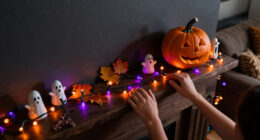
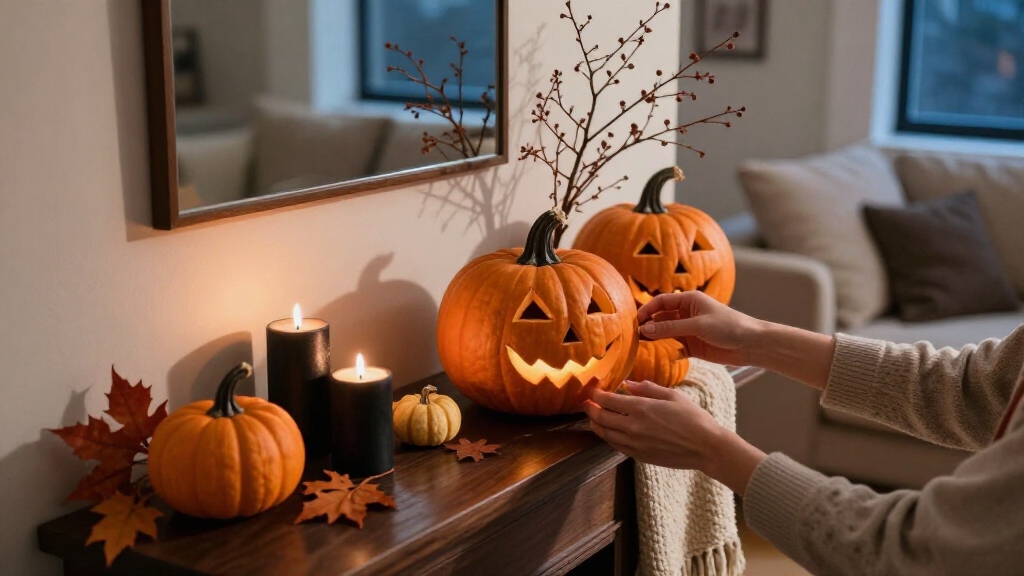
Imagine a living-room mantel after sunset: a battery candle glows beside a black frame, while a branch casts thin shadows on the wall. Side lighting changes the shape of ordinary objects, much like a stage spotlight turns a chair into part of a scene. Try an orange bulb behind a paper ghost in a window, or place a lantern low beside a faux cobweb so its threads stand out.
Keep the palette restrained. Black, orange, purple, bone white, and deep red all work, but you rarely need all five in every room. A black gauze runner and two bone-white pumpkins may say more than a bright assortment of unrelated colors. If you make cobwebs from fabric or add dried foliage, keep them away from flames, heaters, and bulbs that get hot.
Light still needs to serve the people in your home. Keep stairs, exits, and walkways visible, even if you dim the rest of the room. In a dark hallway, tuck a low LED night-light near the floor; you’ll keep the eerie mood without making a midnight trip to the bathroom a guessing game.
Use this five-step plan to decorate without clutter
To decorate without clutter, choose one focal point, repeat a few motifs, and leave the paths people use open. This five-step process helps you build a display that feels finished without covering every surface. Begin with the largest visual area you want people to notice, such as the porch, entryway, mantel, or dining table.
- Pick your mood and palette. For a vintage scene, try amber light, old books, faded fabric, and a few carved pumpkins.
- Choose a focal point. Set a striking porch arrangement or mantel display as the visual anchor.
- Repeat two or three motifs. Use ravens in the window and on the mantel, or repeat small ghosts from the entryway to the dining table.
- Add light and texture. Put a battery candle near gauze or place a paper silhouette where a window light can outline it.
- Walk the route through your home. Check the porch, doorway, stairs, and exit paths from a visitor’s point of view.
For example, in a narrow apartment entryway, a framed silhouette, a small bowl of mini pumpkins, and one warm battery lantern can create a clear scene. A tall floor prop may block the coat rack and make the space feel cramped. On a wide porch, the same small arrangement might disappear, so a larger focal object can anchor it instead.
Think of the focal point as the lead actor and smaller decorations as the supporting cast. The lead needs room to be seen. If guests keep brushing against a prop or stepping around a cable, move or remove it; an unobstructed route matters more than one extra detail.
Make small rooms and porches feel dramatic on a budget
In a small home, use vertical surfaces and windows to create a spooky scene without taking up valuable floor space. A cut-paper silhouette, a decorated door, or a tabletop vignette can make a stronger impression than oversized props wedged beside furniture. On a porch, give one scene enough room to read clearly, then connect it to the entrance with a repeated detail such as orange ribbon or miniature pumpkins.
A renter in a studio apartment, for instance, might tape removable bat silhouettes to a window and dress a narrow shelf with an old book, a battery candle, and a black scarf. The glass frames the scene like a tiny theater stage, while the shelf stays useful for keys. If you have a larger porch, a cluster of pumpkins by the door and one lantern can do the same job at outdoor scale.
Secondhand finds and reusable pieces make good budget choices because they can support more than one Halloween style. An old frame can hold a printed raven one year and a paper moon the next; plain fabric can become a mantel runner, then fold flat for storage. Flat, stackable decorations also suit homes with limited closet space, where a bulky one-season prop can take over a whole shelf.
Scale changes the effect. A large skeleton may suit an open yard but overwhelm a narrow hallway. If you’re decorating a table instead, use a low arrangement that doesn’t block diners from seeing one another. Check outdoor labels before leaving decorations in rain or wind, and bring vulnerable paper or untreated fabric indoors if the weather turns.
Keep the spooky fun safe for guests, children, and pets
A practical Halloween display leaves clear paths, keeps fragile or tempting objects out of reach, and uses flame-free light near fabric, paper, and busy areas. Make the mood fit the people and animals who share your home. A porch can still feel eerie while guests see the steps, and a child-friendly room can look festive without a terrifying mask at eye level.
If young children visit, try friendly ghosts, soft felt bats, or smiling pumpkins rather than startling props near the front door. Put small decorations, wires, and anything that could break beyond a toddler’s reach. For pets, place chewable cords, fake foliage, and small pieces where curious noses and paws cannot get to them; watch how your own animal reacts, since a swaying prop may bother one dog and fascinate another.
Battery-powered candles are a handy alternative around dried leaves and gauze because they avoid an open flame and can sit in places where a real candle would be a poor choice. They still need sensible placement: keep batteries away from children and check the product instructions. For electrical decorations, use items rated for the location, protect connections from moisture as the label directs, and don’t leave cords stretched across a walking path.
Keep every route out of the home clear and visible. A dark doorway may look dramatic in a photo, but visitors need to see the threshold and steps in real life.
Before guests arrive, walk from the sidewalk to the front door and through the room. If you have to sidestep a prop or lift a cord, change the setup. That quick check can preserve the atmosphere while making the display easier to enjoy.
Frequently Asked Questions
How can I make Halloween decor spooky but friendly for young children?
Choose smiling ghosts, soft pumpkins, and warm orange lights instead of jump-scare props or frightening masks. Keep small pieces, cords, and breakable items beyond children’s reach, and leave the entrance bright enough for visitors to see the steps.
What easy Halloween decorations can I make at home?
Cut bat or raven silhouettes from paper and place them in a window, or wrap a frame in dark fabric and add a printed ghost or moon. You can also arrange a branch, an old book, and a battery candle on a shelf for a simple vignette. Keep paper and fabric away from flames, heaters, and hot bulbs.
How do I decorate a small apartment without adding clutter?
Use vertical space: windows, doors, and a narrow shelf can hold silhouettes and small scenes without blocking the floor. Repeat a limited palette and choose one focal point, such as a lit window. Flat paper decorations and foldable fabric are easier to store than bulky props.
Are battery-powered candles a good alternative to real candles?
They are useful near fabric, dried foliage, and busy walkways because they avoid an open flame. Check the product instructions, keep batteries away from small children, and place the candle where it cannot be knocked over. They provide a convenient glow, though the light may look different from a real flame.
How can I secure Halloween decorations outdoors?
Check each product’s label for outdoor use and follow its directions for fastening and weather exposure. Avoid placing light props where wind can send them across a path, and move vulnerable paper or untreated fabric indoors when rain or strong wind arrives. Keep electrical cords and connections out of standing water and away from walkways.
How can I create a cohesive theme with decorations I already own?
Pick one mood and a small color palette, then repeat two or three motifs in the rooms people see first. A raven, an old frame, and black fabric can tie together a window and mantel, even if the objects came from different places. Put aside pieces that introduce a competing theme.
Conclusion
The strongest spooky display usually has a clear mood, one place that catches your eye, and a few details that echo it nearby. Before you add another prop, check whether it strengthens the scene, fits the space, and leaves people room to move.
Start with the porch, mantel, or window you want guests to remember. Give it a little light, a little texture, and enough breathing room for its shadows to show.