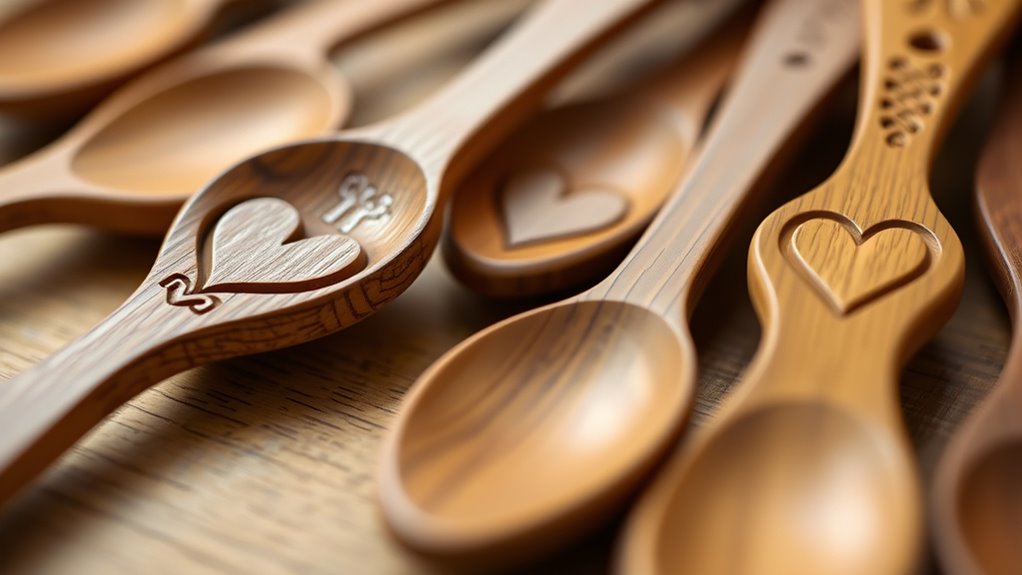

Welsh love spoons are handcrafted wooden tokens exchanged for centuries as symbols of affection. You’ll see that they’re carved from durable woods like oak or yew, featuring meaningful motifs such as hearts, rings, and knots that represent love, loyalty, and hope. These treasured keepsakes embody Welsh cultural traditions and are often given at weddings or special moments. To discover the rich history and intricate craftsmanship behind these timeless symbols of love, explore further insights below.
Key Takeaways
- Welsh love spoons are handcrafted wooden tokens exchanged as symbols of love and affection.
- They originate from Welsh traditions dating back centuries, representing hopes for lasting love and loyalty.
- Carved from durable woods like oak or yew, they feature motifs such as hearts and knots with symbolic meanings.
- Traditionally given at weddings, courtships, or as heartfelt gifts to convey emotional sentiments.
- Each spoon embodies cultural heritage, craftsmanship, and the enduring bond between lovers in Wales.
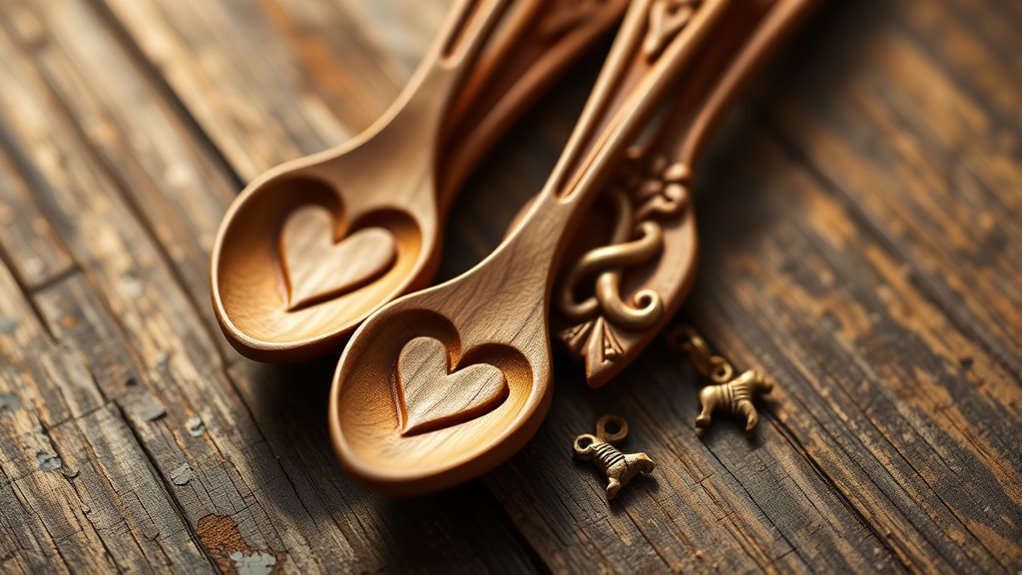
Welsh love spoons are charming handcrafted tokens of affection that have been exchanged for centuries in Wales. These small, intricately carved wooden implements serve as heartfelt symbols of love, dating back to a time when words sometimes failed to express deep feelings. When you give or receive a love spoon, you’re participating in a tradition that embodies much more than just craftsmanship; it’s a gesture rooted in cultural significance. These spoons often carry meanings tied to Welsh history and customs, making them treasured keepsakes that connect you to generations past. The symbolism embedded in each spoon can represent hopes for a happy future, lasting love, or even specific qualities like loyalty and fidelity. As you explore this tradition, you’ll realize that giving a love spoon isn’t just about the object itself—it’s about sharing an enduring sentiment that transcends words.
The creation of a Welsh love spoon involves meticulous carving techniques that have been passed down through centuries. You’ll notice that each spoon is carved from a single piece of wood, often oak or yew, chosen for their durability and significance. The craftsmanship requires patience and skill, with carvers using simple tools like knives and gouges to shape the wood. The carving process is an art form, where you can see detailed motifs, such as hearts, rings, knots, and other symbols, each carefully incorporated to convey specific meanings. The intricate designs aren’t just decorative; they’re deliberate messages crafted into the wood. For example, a heart might symbolize love, while a chain could represent unity or loyalty. The techniques used to create these details involve precise cuts and smooth finishes that highlight the artisan’s skill. When you hold a love spoon, you’re holding a piece of Welsh heritage, crafted with care and imbued with symbolic intent. The artistry behind each spoon reflects centuries of tradition, where every cut and curve is designed to convey a message of affection and devotion. Additionally, the craftsmanship of love spoons often involves detailed motifs, which serve as visual representations of the sentiments being expressed. Whether given at a wedding, a courtship, or as a gift to a loved one, the craftsmanship and symbolism combine to make each love spoon a meaningful and enduring token of love.
In essence, Welsh love spoons are much more than simple wooden objects. Their cultural significance and the carving techniques used to produce them embody a rich history of love and craftsmanship. When you understand the effort and symbolism behind each spoon, you gain a deeper appreciation for this heartfelt tradition. It’s a beautiful reminder that sometimes, actions and handcrafted tokens speak louder than words, conveying love and devotion across generations. So, whether you keep one for yourself or gift it to someone special, a Welsh love spoon is a timeless emblem of affection rooted in Welsh culture and artistry.
Frequently Asked Questions
When Did Welsh Love Spoons Originate?
You might be surprised to learn that Welsh love spoons originated in the 17th century, with a long history rooted in Welsh culture. They were carved by suitors to show affection and were given as tokens of love and commitment. The history origins highlight their cultural significance, symbolizing various messages through specific carvings. Today, these handcrafted spoons continue to represent love and tradition, keeping this charming custom alive.
Are Welsh Love Spoons Still Made Today?
Yes, you can still find Welsh love spoons today. Many artisans and modern manufacturers create these traditional tokens, blending contemporary designs with the classic craftsmanship. You might see unique, personalized love spoons that reflect current tastes while honoring the old symbolism. Whether bought as souvenirs or heartfelt gifts, these spoons remain a meaningful tradition, showing how they’re adapted for modern times without losing their cultural significance.
What Are Common Symbols on Welsh Love Spoons?
You’ll find that common symbols on Welsh love spoons include hearts, arrows, and knots, each carrying special meanings like love, direction, or eternity. Carving techniques involve intricate detailing and smooth finishes to enhance the symbols’ significance. When you create or observe these spoons, you’ll notice how the symbol meanings and skilled carving techniques come together, making each piece a heartfelt token of affection and tradition.
How Are Welsh Love Spoons Traditionally Gifted?
You typically gift Welsh love spoons as a romantic gesture, often presenting them during special occasions or just to show your affection. The traditional gift presentation involves giving the spoon directly to your loved one, sometimes accompanied by a heartfelt message or poem. This meaningful gesture symbolizes love and commitment, making it a cherished keepsake that reflects your feelings and the bond you share.
Can Anyone Learn to Carve Welsh Love Spoons?
Yes, anyone can learn to carve Welsh love spoons with practice and patience. You’ll explore wood carving and develop artistic techniques to create meaningful designs. Start with simple tools and patterns, then gradually improve your skills. You don’t need prior experience—just an interest in craftsmanship. With dedication, you can craft beautiful love spoons that hold sentimental value, embracing this charming tradition and making your own unique gift for someone special.
Conclusion
As you hold a Welsh love spoon, you feel the weight of tradition and the lightness of affection. The intricate carvings tell stories of passion, yet the simple act of giving remains timeless. In a world rushing forward, this handcrafted token stands still—bridging past and present. It’s a reminder that love, like the carved wood, endures through patience and care, forever etched in the heart’s quiet moments.