TL;DR

Get decor and gifts delivered free with Prime
- Fast, free delivery on millions of items
- Prime Video, Amazon Music and more included
- Member-only deals all year
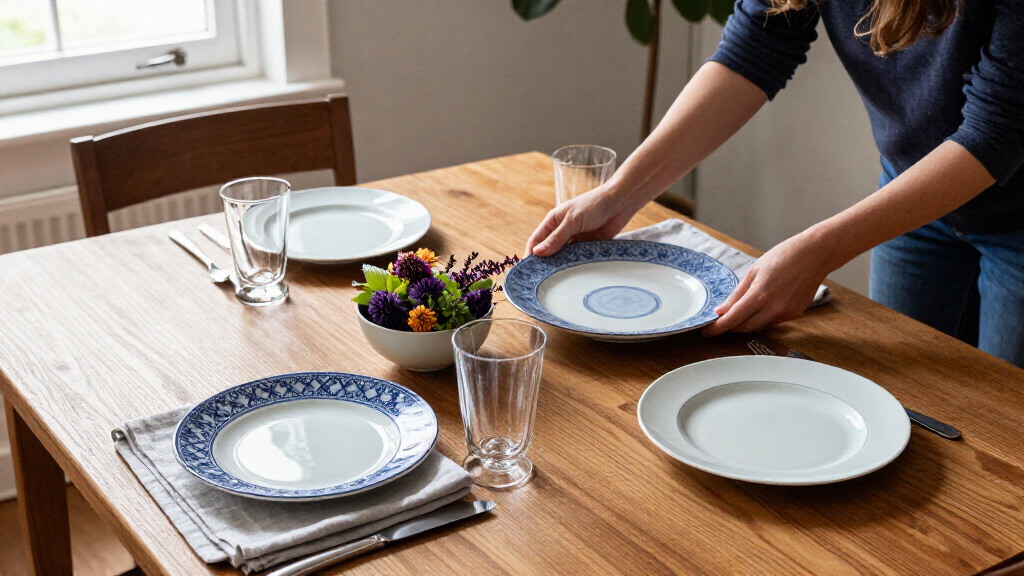
Ina Garten’s new cookbook, Simply Ina, includes a table-setting tip for using mismatched heirloom dishes. She suggests placing two or three patterns of china on top of simple, matching plates to create a look she describes as curated, elegant and casual.
Ina Garten’s cookbook Simply Ina: A Barefoot Contessa Cookbook includes a practical way to use mismatched heirloom plates: set them atop simple, matching plates, then combine two or three china patterns. The advice offers readers a way to put incomplete or differently patterned collections to use without requiring a fully matching set.
Garten calls the approach “using heirloom dishes in a modern way.” In the book, she says she likes combining unmatched dishes for a table that feels casual but elegant. Her suggested foundation is a set of simple, modern matching plates, with patterned china placed on top.
The method is aimed at dishes that can be difficult to use as a complete set. Garten notes that antique or vintage plates may be inherited or found at flea markets and tag sales, and that collections can contain odd numbers of pieces or patterns that do not match. Choosing two or three patterns for the top layer gives those pieces a planned role in the place setting.
The supplied report does not provide a detailed place-setting diagram or specify which courses each plate should serve. Its central advice is about the visual arrangement: use the matching plates as a consistent base and let the mismatched china add variation above them.
A Use for Incomplete China Sets
The tip addresses a common practical problem for people who own inherited or secondhand tableware: a set may be beautiful but incomplete, or several plates may be available only in different patterns. Garten’s approach treats that variety as part of the arrangement rather than a reason to leave the dishes unused.
For readers planning a gathering, the advice also offers a way to make the table feel coordinated without buying a full set of matching china. The matching plates beneath the patterned pieces provide a repeated element, while the upper plates can vary. That is Garten’s stated design idea; the source does not report testing or compare it with other table-setting methods.
As an affiliate, we earn on qualifying purchases.
The Tip in Simply Ina
The advice appears in Simply Ina: A Barefoot Contessa Cookbook, which the supplied Veranda report identifies as Garten’s latest cookbook at the time of publication. Veranda’s writer describes encountering the table-setting idea while reading the book and highlights it among its cooking and entertaining suggestions.
The report presents the plate arrangement as one example of Garten’s approach to entertaining, alongside recipes and other practical ideas. It also points readers toward plates selected by the publication, but the material provided here does not identify those products or give their prices. The useful takeaway is the arrangement Garten describes, rather than a particular purchase recommendation.
As an affiliate, we earn on qualifying purchases.
Details the Report Does Not Provide
The supplied material does not give the cookbook’s publication date, the date of Veranda’s report, or details about the cookbook’s wider reception. It also does not explain whether Garten recommends particular colors, plate sizes, or pattern combinations beyond choosing two or three china patterns.
No specific collection of dishes is shown or named in the source text, and no claim is made that the method suits every table or occasion. The advice is presented as Garten’s personal approach to styling mismatched pieces, not as a formal rule or a tested standard.
tableware for casual elegant tablescape
As an affiliate, we earn on qualifying purchases.
As an affiliate, we earn on qualifying purchases.
How Readers Can Apply the Method
Readers who want to try the approach can start with simple matching plates they already own, then place two or three patterns of heirloom or vintage china above them. The source gives no further steps or required purchases, so the arrangement can be adapted to the dishes available.
The supplied report does not identify a scheduled follow-up, additional announcement, or upcoming event tied to the tip. The next step for readers is practical rather than news-driven: check what is in their cupboards, group the available patterns, and decide whether the layered setting works for their table.
matching base plates for china layering
As an affiliate, we earn on qualifying purchases.
As an affiliate, we earn on qualifying purchases.
Key Questions
What is Ina Garten’s mismatched-plate tip?
Garten suggests placing two or three patterns of china on top of simple, modern matching plates.
Why does Garten recommend matching plates underneath?
She describes the matching plates as the base for a table that can look curated and elegant while remaining casual. The supplied report does not provide a more detailed design rationale.
Can the method work with an incomplete set of heirloom dishes?
That is the problem Garten’s advice addresses. She notes that inherited or secondhand dishes may come in odd numbers and unmatched patterns, and recommends combining patterns rather than relying on a complete set.
Which cookbook includes the advice?
The tip appears in Simply Ina: A Barefoot Contessa Cookbook, according to the Veranda report.
Source: rss
Halloween Picks
halloween
As an affiliate, we earn on qualifying purchases.