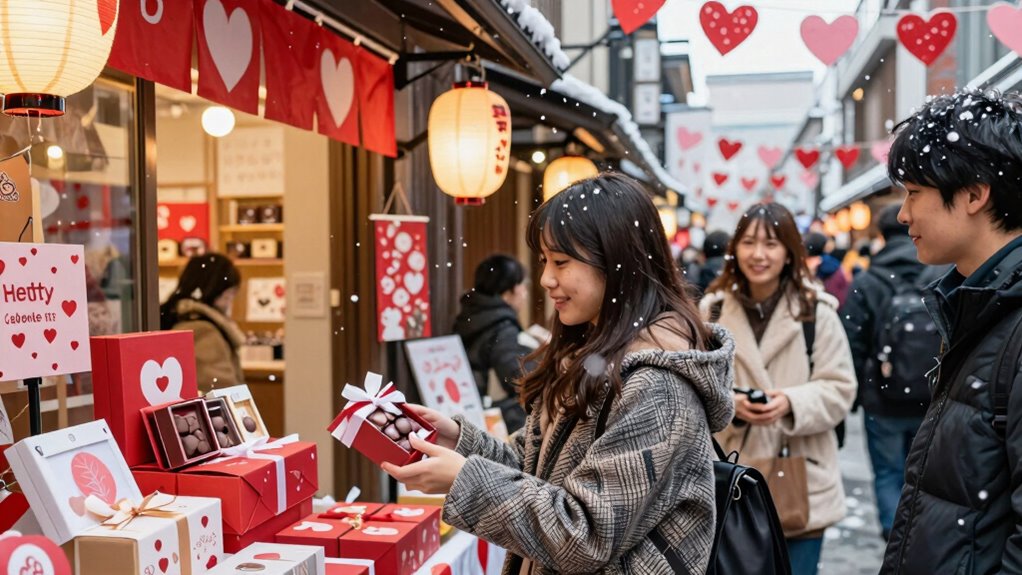

In Japan, Valentine’s Day is all about thoughtful gift-giving rather than just saying “I love you.” Women give chocolates to men, with different types like *giri-choco* for friends and colleagues, and *honmei-choco* for romantic interests. Men respond a month later on White Day. Gifts often carry meaningful messages hidden behind beautiful wrapping or homemade treats. To truly understand these customs and the emotional depth behind them, there’s more to explore below.

Get decor and gifts delivered free — and shop member deals
- Fast, free delivery on millions of items
- Access to Prime Big Deal Days deals on October 6–7
- Prime Video, Amazon Music and more included
Key Takeaways
- Women give chocolates to men, with distinctions between obligation (*giri-choco*) and romantic (*honmei-choco*) gifts.
- Gift-giving involves meaningful gestures and heartfelt notes, emphasizing sincerity and emotional depth.
- White Day, celebrated a month later, is when men reciprocate with gifts, reinforcing relationship bonds.
- Cultural norms prioritize subtlety, social expectations, and understanding the significance behind each gift.
- Valentine’s Day in Japan highlights nuanced expressions of affection rather than straightforward romantic declarations.

Valentine’s Day in Japan isn’t quite like the celebration you might be used to. Instead of a straightforward day of expressing love openly, it’s deeply rooted in cultural traditions that make it unique. One of the most prominent customs is chocolate gifting, which plays a central role in the festivities. When February 14th rolls around, you’ll notice a surge in sweet shops and department stores offering beautifully wrapped chocolates. Women typically give chocolates to men, but the reasons for giving vary. Some chocolates are called *giri-choco*, or “obligation chocolates,” given to friends, colleagues, or acquaintances as a polite gesture. Others are *honmei-choco*, meaning “true feeling chocolates,” which women give to their romantic interests or significant others. This distinction allows for a nuanced expression of affection, making the holiday more complex than just exchanging gifts.
Valentine’s Day in Japan features thoughtful gift-giving, with chocolates symbolizing friendship or romantic love through nuanced gestures.
You’ll also observe that this tradition isn’t solely about the chocolates themselves but about the romantic gestures that accompany them. Women often put thought into selecting the perfect box or making homemade chocolates to show their sincerity. It’s their way of expressing feelings that might be difficult to say aloud the rest of the year. In return, some men respond by giving women gifts on White Day, celebrated a month later, where they reciprocate with chocolates, jewelry, or other tokens of appreciation. This exchange emphasizes the importance of romantic gestures and thoughtfulness, creating a cultural dance of giving and receiving.
If you’re visiting Japan during Valentine’s, you might be surprised how seriously people take these customs. It’s not just about buying chocolates; it’s about the messages behind them. Whether it’s a simple gesture of friendship or a declaration of love, the act of giving is carefully considered and often accompanied by heartfelt notes. The cultural significance of these exchanges highlights how much thought and emotion are invested in this tradition. The importance of understanding these customs is also reflected in the way that cultural nuances influence how people express their feelings, making each gift meaningful and contextually appropriate. Recognizing the social expectations surrounding gift-giving can help visitors navigate these customs with greater sensitivity. Additionally, understanding the history of the tradition can deepen appreciation for its cultural roots. The emphasis on romantic gestures extends beyond chocolates, too, as couples might plan special dates or exchange small gifts to deepen their connection. You’ll see that Valentine’s Day in Japan is less about grand declarations and more about subtle, meaningful expressions of affection. Understanding these customs can give you a deeper appreciation for the cultural nuances involved.
Understanding these traditions gives you a glimpse into how Japanese culture values thoughtfulness and subtlety in relationships. It’s a day when gestures speak louder than words, and even a simple box of chocolates can carry a world of emotion. So, if you’re participating or just observing, remember that in Japan, Valentine’s Day is as much about the art of giving as it is about love itself.
As an affiliate, we earn on qualifying purchases.
Frequently Asked Questions
How Do Japanese Men Typically Respond to Valentine’s Day Chocolates?
Japanese men typically respond to Valentine’s Day chocolates with gratitude, appreciating the romantic gestures from women. They often follow gift giving etiquette by acknowledging the chocolates politely, sometimes with a small gift or return gesture later. Men might also express their feelings more openly, especially if they’re interested in the giver. Overall, their response reflects respect and appreciation, reinforcing the special bond created through this thoughtful exchange.
Are There Any Regional Differences in Valentine’s Day Celebrations Across Japan?
In Japan, regional festival variations influence Valentine’s Day celebrations, making them uniquely charming across districts. You might notice differences in local gift customs, with some areas emphasizing handcrafted chocolates or specific sweets tied to local traditions. These regional nuances add depth to the holiday, allowing you to experience diverse expressions of affection. Embracing these variations enriches your understanding of Japan’s cultural tapestry, making your celebration more meaningful and connected to local customs.
What Are “Giri-Choco” and “Honmei-Choco” in Japanese Valentine’s Traditions?
You’ll learn that “giri-choco” and “honmei-choco” are key parts of Japanese Valentine’s Day chocolate etiquette. Giri-choco, or obligation chocolate, is given to colleagues or friends and shows courtesy. Honmei-choco, or true feeling chocolate, is given to a romantic partner and carries deep cultural significance. These traditions help express respect and affection, highlighting how Japanese society emphasizes nuanced social relationships through thoughtful gift-giving.
How Do Workplaces Participate in Valentine’s Day Activities in Japan?
In Japanese workplaces, you participate in Valentine’s Day activities by taking part in workplace gift exchanges and attending Valentine’s Day office parties. You give chocolates to colleagues, often as giri-choco, to maintain good relationships, and sometimes to superiors or clients. During office parties, everyone shares treats and celebrates together, fostering a sense of camaraderie. It’s a respectful, friendly way to observe the holiday within a professional setting.
Do Single People Participate in Valentine’s Day Traditions in Japan?
On Valentine’s Day in Japan, single people often become the quiet stars of the celebration. They participate in the single celebration by exchanging friendship gestures, like heartfelt notes or small gifts, turning the day into a tapestry of camaraderie. It’s a gentle reminder that love isn’t just romantic; friendship blooms in the smallest acts. You, too, can embrace this day as an opportunity to cherish and connect with those around you.
honmei-choco handmade chocolates
As an affiliate, we earn on qualifying purchases.
As an affiliate, we earn on qualifying purchases.
Conclusion
So, now that you know Japan’s charming chocolate customs and heartfelt gestures, you’re ready to embrace its unique Valentine’s vibe. From giving gifts with grace to enjoying the sweet, sentimental surprises, these traditions turn the day into a delightful display of devotion. Immerse yourself in this dazzling dance of love, don’t delay, and let Japan’s joyful jewels of romance inspire your own celebrations. Remember, love’s language is simply splendid—share it with sincerity and style!
As an affiliate, we earn on qualifying purchases.
As an affiliate, we earn on qualifying purchases.
Fall Picks
fall essentials
As an affiliate, we earn on qualifying purchases.