
TL;DR

Get decor and gifts delivered free with Prime
- Fast, free delivery on millions of items
- Prime Video, Amazon Music and more included
- Member-only deals all year
A Hunker report describes fiber-cement siding as a lower-maintenance alternative to wood, citing resistance to moisture, rot and pests and factory finishes with some manufacturers’ 15- or 25-year fade warranties. The material can cost more upfront—reported at $7 to $18 per square foot in some areas—and is heavy and brittle, so installation costs and local prices matter to any long-term savings claim.
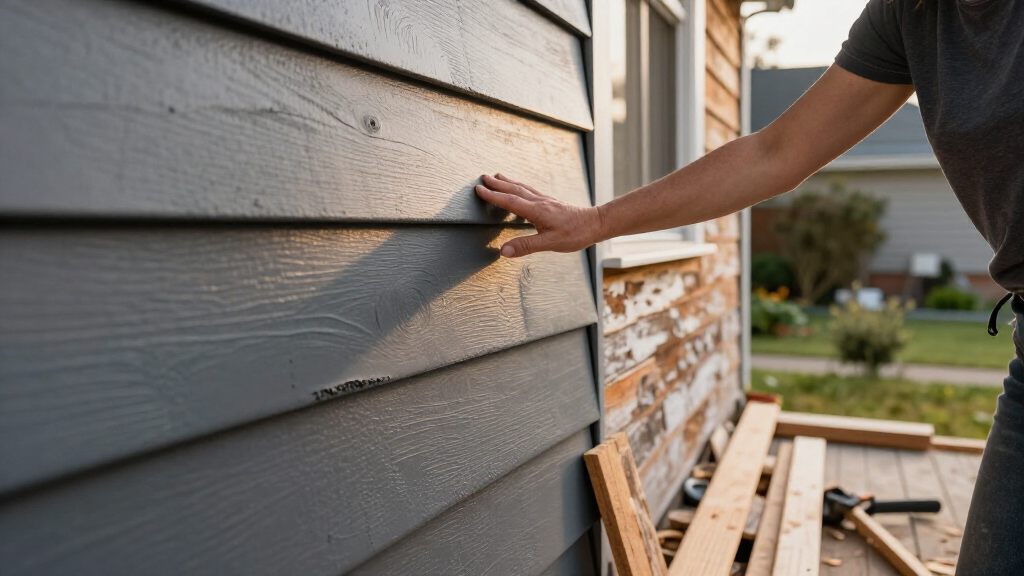
Fiber-cement siding may cost more to install than some wood siding but can reduce recurring upkeep, according to a Hunker report comparing the materials. Made from Portland cement, sand and cellulose fibers, it is designed to resemble wood while resisting moisture, rot and pests; actual long-term savings depend on local pricing, product choice and installation costs.
The report says wood siding can warp or rot when exposed to moisture, fade after prolonged sun exposure and attract pests including termites and woodpeckers. Maintaining it may involve repeated staining or repainting. Fiber cement is described as less vulnerable to those problems, with routine care generally limited to occasional washing or spot cleaning.
Many fiber-cement products have a factory-applied, baked-on finish. Hunker reports that some manufacturers offer warranties against fading for 15 or 25 years; those periods are not a guarantee that every product has that coverage, and the terms vary by manufacturer. Fiber cement also is described as less flammable than wood, though the report does not provide comparative fire-test results.
The material is available in lap, vertical-panel and shingle styles, and in pre-primed or factory-finished options. The report gives a cost range of $7 to $18 per square foot in some areas, depending on region and product line. That figure should not be treated as a universal installed price: the source does not specify whether it includes labor, removal of existing siding or other project costs.
Upfront Price Versus Ongoing Upkeep
For homeowners weighing exterior renovations, the central trade-off is a potentially higher initial bill against less frequent maintenance. Wood may require recurring repainting or restaining, while a durable factory finish could reduce that work. Whether fiber cement is cheaper over the life of the siding cannot be established from the report alone: it provides no matched cost comparison covering purchase, installation, maintenance and replacement over a defined period.
Fire resistance and reduced susceptibility to rot and pests may also matter when choosing materials, but those benefits do not eliminate the need to check product specifications and local building requirements. A homeowner comparing bids should account for the full project cost, the finish warranty and the expected maintenance schedule rather than relying on material price alone.
Popular right now

Shark Rocket Pet Plus Corded Stick Vacuum, Bordeaux, HV322

KitchenAid Artisan 5-Quart Tilt-Head Stand Mixer, Almond Cream

Ninja Luxe Café Mini Plus Espresso and Drip Coffee Machine with AutoFroth, Stainless Steel, ES351
As an affiliate, we earn on qualifying purchases.
How Fiber Cement Compares With Wood
Fiber cement is a composite material made with Portland cement, sand and cellulose fibers. Its appearance can mimic wood siding, including traditional horizontal clapboards and shingle profiles, while vertical panels offer another design option. Pre-primed boards can be painted by the homeowner, while factory-finished products are sold in selected color ranges.
The source frames the comparison around wood’s exposure to moisture, sunlight and pests, and the labor involved in preserving its appearance. It does not present independent performance testing or a lifecycle-cost study. The reported advantages and warranty examples should therefore be read as general product information, not a guarantee that every fiber-cement brand or installation will perform identically.
“Fiber cement siding is generally made with a factory-applied, baked-on finish.”
— Hunker report
Costs and Product Warranties Vary
The supplied report does not give a publication date, a national price average or a direct, time-based calculation showing when fiber cement becomes less expensive than wood. It also does not state whether its $7-to-$18-per-square-foot range includes labor or related construction expenses. Those details can materially change a project estimate.
Warranty coverage is product-specific, and the cited 15- and 25-year fade warranties apply only to some manufacturers’ offerings, subject to terms not detailed in the source. The report also does not quantify fire performance or establish how the materials compare under particular local climate and code conditions.
Compare Installed Quotes Before Choosing
Homeowners considering a siding replacement can ask contractors for itemized estimates covering materials, labor, removal and finishing. They should compare the proposed fiber-cement product’s warranty and care instructions with the maintenance needs of the specific wood option under consideration.
Because fiber cement is heavy and brittle, the report advises hiring a professional rather than attempting installation as a do-it-yourself project. The next practical step is to obtain local quotes and verify product and building requirements; the available source does not identify a new policy, product launch or scheduled industry milestone.
Key Questions
Is fiber-cement siding always cheaper than wood?
No. The report says fiber cement can cost more upfront than some wood options. It may reduce ongoing maintenance, but the source provides no full lifecycle-cost comparison proving it will be cheaper in every location or project.
How much does fiber-cement siding cost?
Hunker reports a range of $7 to $18 per square foot in some areas, varying by region and product line. The source does not specify whether that figure includes installation or other project expenses.
Does fiber cement need to be painted?
Some products are pre-primed and can be painted; others come factory-finished in selected colors. The report says factory finishes may reduce maintenance, and some manufacturers offer fade warranties, but terms differ by product.
Can homeowners install fiber-cement siding themselves?
The report recommends professional installation because fiber cement is heavier and more brittle than wood. Homeowners should get qualified local advice and confirm applicable building requirements before work begins.
Source: rss