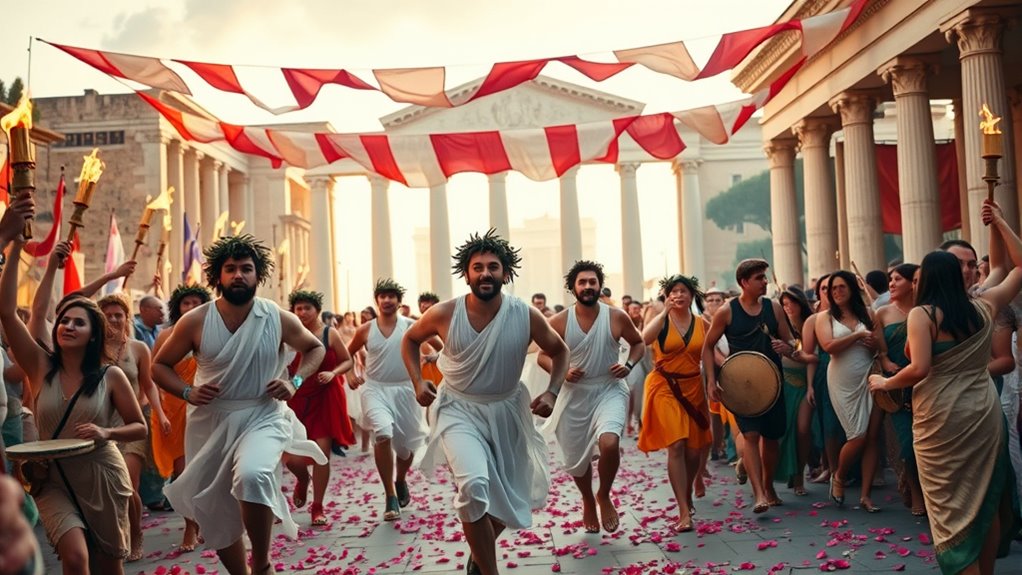

Lupercalia, an ancient Roman festival, celebrated love, fertility, and community bonding through rituals like pairing young couples and fertility rites. These traditions involved symbolic acts meant to promote health and love, many of which influenced later customs. Over time, pagan practices blended with Christian traditions, shaping modern Valentine’s Day. If you explore further, you’ll discover how these ancient rituals evolved into the romantic celebrations many enjoy today.
Key Takeaways
- Lupercalia was an ancient Roman fertility festival involving love rituals, animal sacrifices, and symbolic acts to promote fertility and social cohesion.
- Elements of Lupercalia, such as pairing individuals and love-related rituals, influenced early Valentine’s Day customs.
- The festival’s focus on love and fertility persisted in cultural memory, shaping medieval courtship practices associated with February 14.
- Christian adaptations and suppression of pagan customs led to the transformation of Lupercalia’s themes into modern romantic celebrations.
- Modern Valentine’s Day traditions, like exchanging love notes and gifts, have roots in ancient fertility and love rituals from Lupercalia.

Many modern Valentine’s Day traditions trace back to ancient Roman and pagan festivals, particularly the celebration of Lupercalia. This festival, held in mid-February, was a time when love rituals and fertility celebrations took center stage. During Lupercalia, priests called Luperci performed rites to promote fertility, invoking the god Lupercus, believed to ward off evil spirits and ensure abundant crops and healthy offspring. As part of these fertility celebrations, young men would often draw names of women from a jar, pairing them for the duration of the festival—sometimes leading to romantic connections. These love rituals aimed to foster love and fertility, blending spiritual practices with social bonding, and emphasizing the importance of romantic and reproductive success.
The core of Lupercalia involved a series of energetic and symbolic acts designed to invoke fertility and love. Men would sacrifice goats and a dog, then strip down to run through the city streets, gently slapping women with strips of goat hide. Many women believed that this act increased their fertility and brought them good luck in love. These rituals, although raw and primal, reflected a broader pagan tradition of celebrating fertility through physical acts and symbolic gestures. The festival’s emphasis on fertility celebrations helped forge social bonds and reinforced the importance of love and reproduction within communities. It wasn’t just about fertility in a biological sense but also about fostering romantic love, which was often seen as essential for societal prosperity.
Over time, as Christianity spread across the Roman Empire, many pagan customs were adapted or suppressed. However, some elements of Lupercalia persisted, subtly influencing later practices associated with love and courtship. The romantic pairing aspect, along with the emphasis on love rituals, remained part of cultural consciousness. By the Middle Ages, the idea of February 14th as a day for love and romance gained traction, possibly echoing the fertility themes of Lupercalia. The festival’s influence can still be felt today in Valentine’s Day traditions, where love rituals like exchanging notes and gifts symbolize affection and romantic commitment. So, when you celebrate Valentine’s Day with cards or flowers, remember that these customs may have roots in ancient fertility celebrations and love rituals that aimed to invoke love, fertility, and social harmony centuries ago.
Frequently Asked Questions
How Did Lupercalia Influence Modern Romantic Customs?
Lupercalia influences your modern romantic customs through ancient fertility rituals and romantic symbolism. During the festival, couples exchanged tokens and embraced, inspiring today’s Valentine’s Day traditions like gift-giving and expressing love. You might wear or exchange symbols of love, echoing the ancient emphasis on romantic connection. These customs celebrate love’s fertility and deepen emotional bonds, making your modern Valentine’s Day a continuation of those historical, heartfelt practices.
Were Women Specifically Targeted During Lupercalia Celebrations?
During Lupercalia, women were often specifically targeted in gender targeting and ritual participation. Men would gently slap or run through streets, touching women to promote fertility and love. Women actively participated in these rituals, believing it would increase their chances of bearing children or finding love. This gender-specific targeting was central to the festival’s practices, emphasizing fertility and romantic connection, which influenced later Valentine’s Day traditions.
Did Other Ancient Cultures Influence Valentine’s Day Traditions?
Imagine ancient markets bustling with couples exchanging tokens of love, their footsteps echoing through time. Other ancient cultures, like the Greeks and Egyptians, influenced Valentine’s Day with their own traditions of love and fertility. These cultural overlaps, rooted in ancient fertility rituals, helped shape today’s romantic customs. You can see how these diverse influences blended over centuries, creating a celebration that honors love’s universal power across different civilizations.
How Did the Transition From Pagan to Christian Practices Occur?
You see, the shift from pagan rituals to Christian practices happened gradually as the church sought to replace pagan festivals with Christian celebrations. Christian adoption of pagan customs allowed them to resonate more easily with people, blending traditions like feasts and rituals into religious observances. This process helped Christianity spread, making old pagan customs part of Christian culture, especially during festivals like Valentine’s Day, which now celebrates love and devotion.
Are There Any Surviving Rituals From Lupercalia Today?
You might find it fascinating that some modern rituals subtly echo Lupercalia’s festival remnants today. Though not overt, certain customs like playful touches during Valentine’s Day or fertility-themed celebrations carry whispers of ancient traditions. These gentle echoes keep the spirit alive, blending history with today’s festivities. While direct rituals have faded, the essence of Lupercalia’s lively, affectionate energy continues to inspire and influence how we celebrate love and community now.
Conclusion
Think of Valentine’s Day as a delicate seed planted in ancient soil, nourished by the rituals of Lupercalia and pagan traditions. Though its face is now adorned with modern symbols, its roots reach deep into the fertile ground of history, whispering stories of love and renewal. As you celebrate, remember you’re tending to an ancient garden, where the echoes of Roman and pagan festivals bloom anew, reminding us that love’s timeless dance continues through the ages.