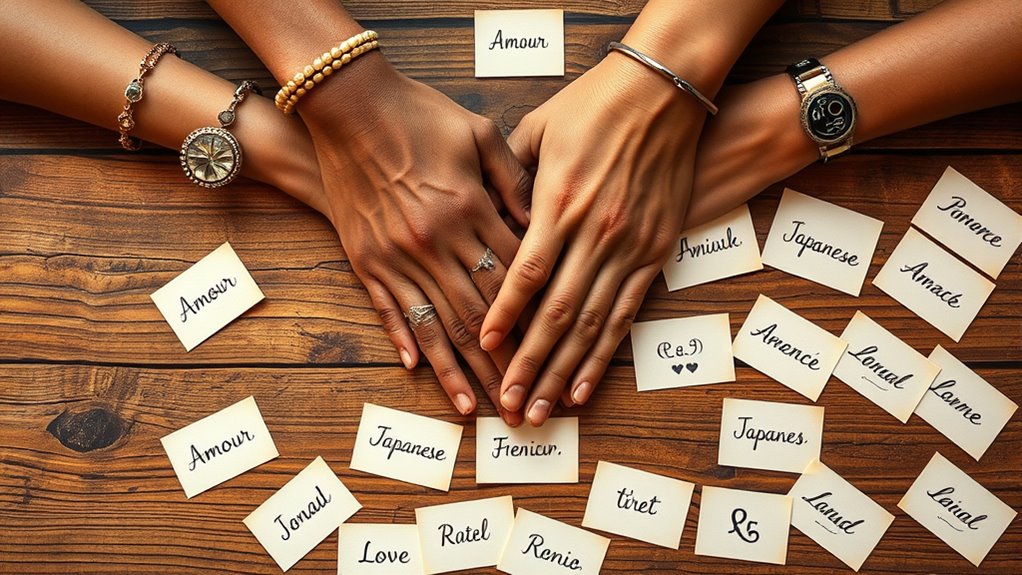

Exploring words for love in different languages shows how cultures express romance, affection, and devotion uniquely. For example, French “amour” conveys elegance and passion, while Japanese “koi” reflects intense longing. Hindi “pyaar” covers a broad emotional spectrum, and Arabic “hob” can mean love or affection in various contexts. These words reveal how societies view emotional connections and social norms. If you’re curious, discovering more about these diverse expressions will deepen your understanding of love worldwide.
Key Takeaways
- Different languages use poetic metaphors or straightforward terms to express love, reflecting unique cultural values.
- Love words like “amour,” “koi,” and “pyaar” embody distinct emotional nuances rooted in their cultures.
- Social norms influence how openly or reservedly love is expressed through language across various societies.
- Recognizing cultural variations in love vocabulary provides deeper insight into societal attitudes towards intimacy.
- Love terminology is intertwined with cultural identity, showcasing how different societies celebrate and communicate affection.

Love is a universal emotion, but every language has its own unique way of expressing it. When you explore different languages, you’ll notice fascinating cultural variations in romantic expressions that reveal how diverse human connection can be. Some cultures emphasize poetic metaphors, while others prefer straightforward terms. This linguistic diversity in love terminology reflects deeply rooted beliefs, social norms, and emotional nuances that shape how people communicate affection. For instance, in French, “amour” embodies romance with an air of elegance and passion, often associated with poetic love songs and literature. Meanwhile, in Japanese, “koi” refers to romantic love but is often linked to passionate, intense feelings, emphasizing devotion and longing. In Hindi, “pyaar” is a versatile term that covers a broad spectrum of affection, from friendship to romantic love, illustrating how one word can carry multiple layers of meaning. Recognizing the cultural significance of these terms can deepen your understanding of how love is expressed in different societies.
You’ll find that in some languages, words for love are embedded in everyday expressions, making love feel more integrated into daily life. For example, in Arabic, “hob” is often used in various contexts, from romantic feelings to general affection, highlighting the importance of love in social interactions. Similarly, in Swahili, “upendo” signifies love and compassion, underscoring a community-centered approach to emotional bonds. These variations aren’t just linguistic; they embody cultural attitudes towards intimacy and emotional expression. You may notice that in certain societies, romantic language is more reserved or formal, while in others, it’s open and expressive. For example, in Scandinavian languages, love terms tend to be simple and understated, reflecting a cultural tendency toward subtlety and practicality, whereas in Mediterranean cultures, love words are often passionate and expressive.
Understanding these differences enriches your appreciation for how humans from diverse backgrounds experience and articulate love. Each language provides a window into a culture’s values and social fabric, showing that love isn’t just a feeling but a reflection of societal norms. Recognizing these variations helps you see that love isn’t one-size-fits-all; it adapts to the cultural context, shaping how you might express your feelings across different languages and traditions. As you learn these words and their cultural nuances, you gain insight into how people from around the world celebrate, cherish, and communicate love uniquely. This linguistic diversity in love terminology reminds you that love is both universal and beautifully varied, woven into the very fabric of different languages and cultural identities.
Frequently Asked Questions
How Do Cultural Norms Influence Expressions of Love?
Cultural norms heavily influence how you express love, with societal expectations shaping romantic language and behaviors. In some cultures, openly declaring love is encouraged, while others view it as inappropriate or private, influenced by societal taboos. These norms guide what’s acceptable, affecting whether you show affection publicly or reserve it for private moments. Ultimately, cultural expectations shape your love expressions, creating diverse ways to connect that reflect shared values and beliefs.
Are There Unique Love Words in Indigenous Languages?
You’ll find that indigenous language love terms are often deeply meaningful, reflecting unique cultural love symbols. These words go beyond simple expressions, embodying specific traditions, values, and relationships. By learning these indigenous terms, you connect more authentically with their cultures, appreciating how love is uniquely expressed through language. These words often carry historical significance, making them powerful symbols of love rooted in tradition and cultural identity.
How Do Slang and Colloquialisms Differ Across Cultures?
Slang and colloquialisms are like colorful threads woven into the fabric of language, each vibrant across cultures. You’ll find regional slang expresses local identity, while colloquial idioms reveal shared experiences. Across cultures, these expressions evolve uniquely, shaping how people communicate affection, humor, or frustration. By understanding these differences, you connect more deeply—and realize that language isn’t just words, but a reflection of cultural heartbeat.
Can Love Words Reveal Societal Values and Beliefs?
Love words reveal societal values and beliefs through cultural symbolism and historical influences, showing what a society cherishes most. When you learn how different cultures express love, you notice their unique priorities—like respect, intimacy, or devotion. These words reflect deeper societal norms, gender roles, and historical experiences, helping you understand what a community holds dear. By exploring love expressions, you gain insight into their collective identity and cultural values.
How Do Non-Verbal Gestures Complement Verbal Love Expressions?
Non-verbal gestures perfectly complement verbal love expressions by adding depth and sincerity. Your body language, like hugging or holding hands, conveys warmth and affection, while facial expressions such as smiling or eye contact show genuine emotion. These cues reinforce your words, making your love more authentic. When verbal words fall short, your body language and facial expressions speak volumes, creating a powerful connection that words alone may not fully express.
Conclusion
Exploring love words across cultures reveals how language shapes our deepest emotions. For example, in Japan, “Aishiteru” conveys profound romantic love, reflecting a cultural emphasis on sincerity. Imagine you’re learning a new language and discover a word that perfectly captures your feelings—it’s like unfastening a new way to connect. Embracing these diverse expressions deepens your understanding, reminding you that love’s language is universal yet beautifully unique in every culture you explore.