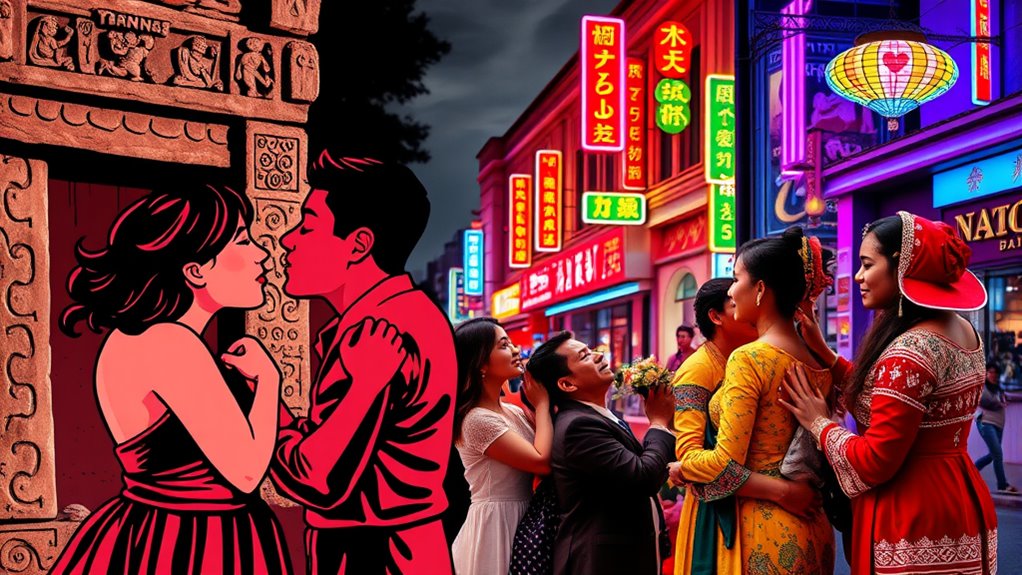

Across cultures, Kiss Day carries diverse meanings from ancient rituals symbolizing trust, reverence, and social bonds to modern expressions of love and affection. In some societies, kisses are gestures of greeting or respect, while others see public kissing as inappropriate. Over time, the act evolved from sacred customs in civilizations like Egypt and Greece to romantic gestures today. Exploring these cultural differences reveals how Kiss Day reflects both historical traditions and contemporary relationships—keep exploring to discover more about its rich significance.
Key Takeaways
- Kissing originated thousands of years ago as a sign of loyalty, trust, and social bonding in ancient civilizations like Egypt and Mesopotamia.
- Cultural perceptions of kissing vary widely, with Western societies favoring romantic and friendly kisses, while Eastern cultures often view public displays as inappropriate.
- Kissing became a romantic gesture during the Renaissance, evolving from social and religious practices to personal expressions of love.
- Social norms influence how, when, and where kissing occurs, often reflecting respect, hierarchy, or privacy across different cultures.
- Modern interpretations of kissing blend ancient rituals with contemporary romance, emphasizing emotional connection and cultural diversity worldwide.

Kiss Day is celebrated worldwide, but the way different cultures approach this gesture varies considerably. You might see it as a simple expression of affection or as a deeply meaningful act rooted in long-standing traditions. The cultural significance of kissing isn’t universal; it’s shaped by the history and customs of each society. In many cultures, a kiss symbolizes love, respect, or greeting, while in others, it might carry more specific social meanings. Understanding the historical origins of kissing helps explain why it holds such diverse significance across the globe.
Historically, the act of kissing dates back thousands of years, with evidence found in ancient texts and artifacts. In some ancient civilizations, like Egypt and Mesopotamia, kisses were exchanged as a sign of loyalty and reverence. The Greeks and Romans further developed the gesture, using it as a greeting among friends and family, as well as a display of love between romantic partners. During these periods, the kiss was often a symbol of trust and intimacy, cementing social bonds. Over time, religious influences also shaped its meaning; in Christianity, for instance, the “kiss of peace” became a ritual symbolizing reconciliation and unity within the community. These historical origins reveal that kissing was never just about physical affection but also about social cohesion and trust.
In many Western cultures, kissing evolved into a romantic gesture, especially during the Renaissance and subsequent eras, when love and courtship became more openly expressed. Today, in places like the United States and Europe, kisses on the cheek serve as friendly greetings, while a deep kiss on the lips signifies romantic love. Meanwhile, in Eastern societies such as Japan or China, public displays of affection like kissing are less common and often considered private or inappropriate, reflecting different cultural sensitivities and social norms.
You should also recognize that in some cultures, kissing is more ceremonial. For example, in Middle Eastern traditions, a kiss on the hand or forehead can convey respect or reverence, especially toward elders. In South Asia, touching foreheads or exchanging a quick peck is sometimes part of traditional greeting rituals. These variations show how the act of kissing adapts to the cultural landscape, emphasizing respect, love, or social hierarchy depending on the context. Additionally, the origins of kissing highlight its deep roots in human history and social practices, extending beyond mere physical expression.
In essence, the way you interpret or participate in kissing depends heavily on cultural background. Its roots lie deep in history, shaped by societal values and customs. Whether seen as a sign of love, respect, or greeting, the act of kissing continues to evolve, reflecting the complexity of human relationships across different cultures worldwide.
Frequently Asked Questions
How Did Kiss Day Originate Historically?
You might be surprised to learn that Kiss Day has roots in ancient ritual origins, where kissing symbolized respect, love, or a blessing. Over time, it evolved into a form of cultural symbolism, representing affection and emotional connection. Historically, different cultures used kissing to seal alliances or express devotion, transforming into a modern celebration of romance. Today, it’s a day to honor love through this timeless gesture.
Are There Specific Cultural Symbols Associated With Kissing?
You’ll find that many cultures associate specific symbols with kissing, reflecting their unique traditional gestures. For example, in some societies, a forehead kiss symbolizes respect or affection, while in others, a cheek kiss signifies friendliness. Cultural symbolism varies widely, often rooted in traditional gestures that convey love, respect, or greeting. Recognizing these symbols helps you understand the deeper meanings behind kissing customs across different cultures.
How Is Kiss Day Celebrated in Non-Western Countries?
You might be surprised, but in many non-western countries, Kiss Day isn’t a big deal—it’s more about respecting traditional customs. Cultural variations mean some celebrate with public displays of affection, while others keep it private. In places like India or Japan, people might exchange symbolic gestures or gifts instead of kisses. So, on Kiss Day, you could find yourself embracing tradition rather than breaking cultural norms, making it uniquely meaningful.
What Are the Psychological Effects of Kissing?
When you kiss, it triggers psychological bonding and boosts emotional intimacy, making you feel closer to your partner. This act releases oxytocin, the “love hormone,” which strengthens your emotional connection. Kissing also reduces stress and increases happiness by releasing endorphins. Overall, it deepens your emotional bond and fosters trust, creating a powerful psychological effect that enhances your relationship’s intimacy and your sense of connection.
How Do Different Cultures Perceive Public Displays of Affection?
You’ll find that different cultures perceive public displays of affection very differently. In some societies, cultural taboos restrict open emotional expressions, so kissing or holding hands in public might be frowned upon or considered inappropriate. Conversely, others embrace these displays as normal and a healthy part of emotional expression. Understanding these cultural nuances helps you navigate social norms respectfully, recognizing that perceptions of PDA are shaped by local traditions and values.
Conclusion
As you reflect on the rich tapestry of kiss day across cultures, you realize it’s more than just a gesture—it’s a dance of history, emotion, and connection. From ancient rituals to modern romances, each kiss paints a vivid picture of love’s universal language. Feel the warmth of shared moments, like sunlight on a lover’s face or a gentle breeze whispering secrets. In every kiss, you find a timeless story waiting to be written anew.