

In Japan, Valentine’s Day features two main types of chocolates: honmei choco and giri choco. Honmei choco is reserved for someone special, like a romantic partner or spouse, and shows genuine love or affection. Giri choco, on the other hand, is given out of courtesy to friends, colleagues, or acquaintances to maintain good relationships. Understanding these customs reveals how deeply societal values shape emotional expression, and if you explore further, you’ll discover even more fascinating cultural insights.
Key Takeaways
- Honmei choco is given by women to romantic partners, symbolizing true love and personal affection.
- Giri choco is given to colleagues or acquaintances as a polite gesture, emphasizing social obligations.
- The tradition reflects Japan’s cultural values of harmony, respect, and emotional expression through gift-giving.
- Women typically give honmei choco on Valentine’s Day, while giri choco maintains social relationships.
- These practices are complemented by White Day, when men reciprocate with gifts to express appreciation.
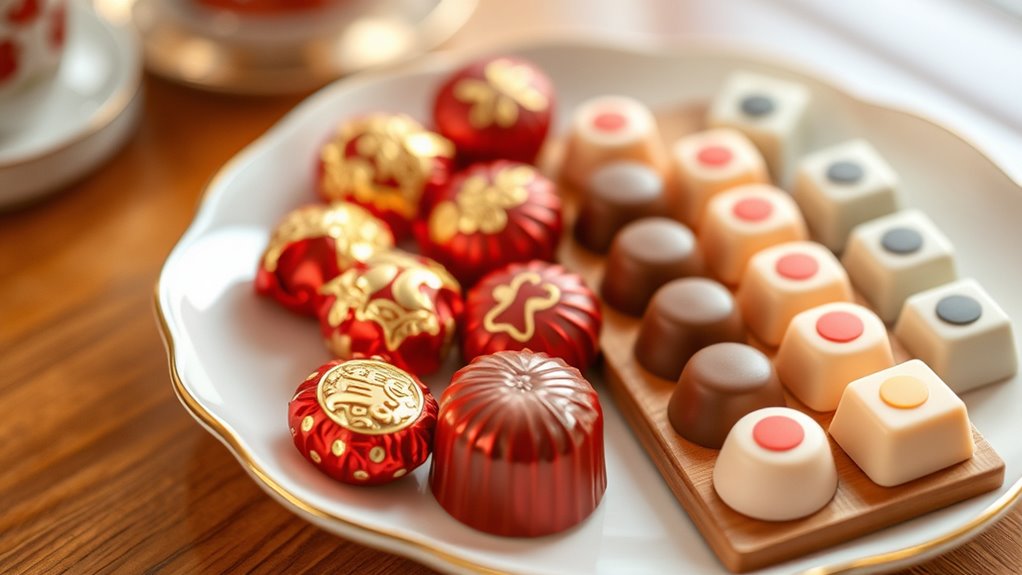
In Japan, Valentine’s Day isn’t just about giving chocolates; it’s a cultural tradition with two distinct types of gifts—honmei choco and giri choco. This unique practice reflects the deep-rooted Valentine’s customs that influence how people express their feelings and social bonds. You might notice that women typically give chocolates to men, but the reasons behind these gifts differ markedly, shaping the cultural significance of the holiday. Honmei choco, which translates roughly as “true feeling” chocolate, is reserved for someone special—like a romantic partner, spouse, or someone you truly care about. When you give honmei choco, it’s a heartfelt gesture, symbolizing love, affection, or deep admiration. It’s often handcrafted or carefully selected to show genuine emotion, making the act of giving more meaningful than just a simple gift.
On the other hand, giri choco, meaning “obligation” or “courtesy” chocolate, serves a more social purpose. You give giri choco to colleagues, friends, or acquaintances to maintain harmony and social etiquette. It’s a way of showing politeness and appreciation without necessarily implying romantic interest. The act of giving giri choco helps reinforce relationships and uphold societal expectations, emphasizing the importance of community and mutual respect in Japanese culture. This distinction between honmei and giri chocolates highlights how Valentine’s customs in Japan are intricately linked to social norms and cultural values. Giving chocolates isn’t just about personal feelings; it’s an expression of social harmony and respect, which underscores the cultural significance of the holiday.
Moreover, the practice extends beyond just women giving chocolates to men. Men are expected to reciprocate on White Day, celebrated a month later, by giving gifts that often include chocolates. This reciprocal exchange cements relationships and continues the cycle of appreciation rooted in these cultural traditions. The significance of these customs is evident in how they’re woven into daily life, reflecting a broader societal emphasis on harmony, gratitude, and emotional expression through thoughtful gestures. Recent trends also show an increase in market growth for chocolates and gift items associated with these customs, further embedding the tradition into modern society. Understanding these distinctions in Valentine’s customs helps you appreciate how deeply ingrained and meaningful this tradition is in Japan. It’s not merely about chocolates; it’s about communicating feelings, fostering relationships, and maintaining social bonds within a rich cultural framework. This nuanced approach to gift-giving makes Valentine’s Day in Japan a unique celebration of both personal sentiment and societal harmony.
Frequently Asked Questions
How Did the Tradition of Giving Giri Choco Originate?
You might be surprised to learn that the tradition of giving giri choco originated in post-World War II Japan, as a way for women to show appreciation without romantic intentions. Its history origins lie in fostering social harmony and maintaining polite relationships. The cultural significance is that it helps navigate social obligations, allowing women to express gratitude or friendship while respecting boundaries, making it a meaningful yet practical custom in Japanese society.
Are There Regional Differences in How Honmei and Giri Choco Are Exchanged?
You might think the way you exchange honmei and giri choco is universal, but regional customs and cultural variations paint a different picture. In some areas, people emphasize heartfelt gifts, while elsewhere, more casual exchanges are common. It’s a case of “think globally, act locally,” since traditions adapt to local customs, making the celebration uniquely regional. So, your approach to giving chocolates might differ depending on where you are in Japan.
Do Men Give Chocolates Back to Women on White Day?
Yes, men often give chocolates back to women on White Day, following traditional gift etiquette and gender roles. On this day, it’s customary for men to reciprocate the chocolates received on Valentine’s Day, especially honmei chocolates, with gifts like chocolates or other tokens of appreciation. This exchange reinforces social expectations around gift-giving and maintains the cultural balance of giving and receiving in Japanese relationships.
What Are Popular Alternatives to Chocolates for Giri Gifts?
Gifting alternatives to chocolates can make your gesture stand out like a fireworks display. You might consider practical items like stationery, small plants, or gourmet treats, which carry cultural significance of thoughtfulness. These alternatives show appreciation without the romantic connotations of chocolates, making them perfect giri gifts. By choosing culturally meaningful tokens, you demonstrate respect and understanding, strengthening your relationship in a way that’s both thoughtful and memorable.
How Has the Pandemic Affected Giri and Honmei Chocolate Exchanges?
During the pandemic, you’ve likely noticed that giri and honmei chocolate exchanges shifted toward virtual gifting. The pandemic impacts made in-person exchanges difficult, so many people now send chocolates or gifts online to maintain tradition safely. This shift helps keep relationships strong despite social distancing, and it encourages more creative, personalized virtual gestures. Overall, the pandemic has accelerated digital adaptations in these traditions, making exchanges more convenient while still meaningful.
Conclusion
Understanding Japan’s honmei and giri choco traditions reveals more than just sweet gestures; it shows how cultural expectations and personal feelings intertwine. While giri choco represents obligation, honmei choco embodies genuine love. You’re reminded that sometimes, what’s given out of duty can overshadow true affection. Yet, both chocolates tell a story—one of connection, responsibility, and the delicate balance between societal norms and heartfelt emotions. In these chocolates, Japan’s traditions speak quietly but profoundly.