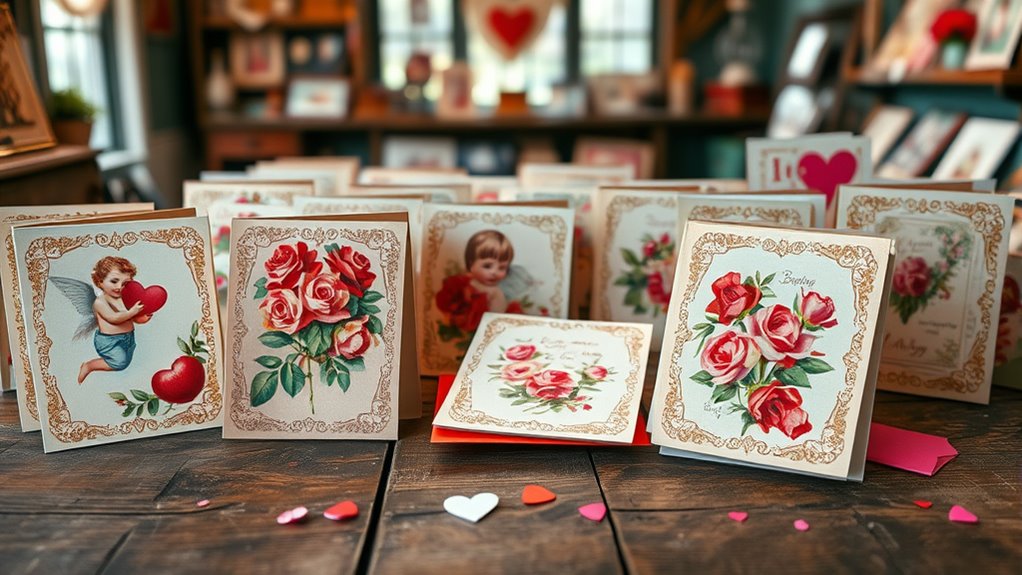

Greeting card companies have heavily influenced Valentine’s Week by creating emotionally charged designs and clever marketing that encourage people to express love and affection through cards. They popularized themes of romance, friendship, and appreciation, making card-giving a meaningful tradition. Their innovative visuals and personalized options appeal to a wide audience, reinforcing Valentine’s Week as a celebration of heartfelt connections. To discover how these strategies continue to shape the holiday, keep exploring this fascinating topic.
Key Takeaways
- Greeting card companies popularized Valentine’s Week by promoting cards as essential expressions of love and affection.
- They used emotional marketing emphasizing nostalgia, romance, and personal bonds to make card sending a cherished tradition.
- Innovations in design and personalization increased the emotional impact, reinforcing the importance of exchanging cards during Valentine’s Week.
- Mass production made cards affordable and accessible, encouraging widespread participation in Valentine’s celebrations.
- Strategic campaigns and collaborations helped embed Valentine’s Week culturally, making greeting cards a central feature of the holiday.

Valentine’s Week has become a peak season for greeting card companies, as they play a essential role in helping people express their love and affection. These companies have shaped the way we celebrate this romantic holiday, and their influence stretches back over a century. Understanding their history origins reveals how they transformed Valentine’s Day from simple gestures into a worldwide phenomenon. In the early 19th century, greeting cards were handmade, often elaborate and personalized, but they weren’t widely accessible. The rise of printing technology and mass production in the late 1800s made it possible for companies to produce affordable, standardized cards. This shift marked the beginning of the modern greeting card industry, with companies like Hallmark emerging as dominant players. They capitalized on the growing demand for convenient ways to send heartfelt messages, turning Valentine’s Day into a commercial affair.
From the start, marketing strategies played a essential role in establishing and expanding the popularity of greeting cards for Valentine’s Week. Companies realized they could create emotional connections with consumers by tapping into universal themes of love, friendship, and affection. They used clever advertising campaigns to evoke feelings of nostalgia, romance, and urgency, encouraging people to buy cards to express their sentiments. Promotions centered around the idea that sending a card was more than a gesture—it was a way to reaffirm bonds and show someone they mattered. Over time, these marketing strategies evolved to include seasonal sales, special editions, and collaborations with popular celebrities, making greeting cards a must-have during Valentine’s Week. Additionally, the development of color accuracy in printing technology allowed for more vibrant and appealing card designs, further enhancing their emotional impact.
As the industry grew, companies also understood the importance of variety and personalization. They introduced different card styles, from humorous and cute to elegant and sentimental, catering to a broad audience. This diversification helped expand their market reach and reinforced the notion that everyone could find a card that reflected their unique feelings. Today, greeting card companies leverage digital marketing, social media campaigns, and innovative designs to stay relevant and competitive. Their marketing strategies continue to emphasize the emotional significance of Valentine’s Week, ensuring that sending a greeting card remains a cherished tradition. Through these efforts, greeting card companies have not only shaped how we celebrate love but have also kept Valentine’s Week at the forefront of our cultural calendar, making it a time when heartfelt messages and thoughtful gestures take center stage.

EDSG Personalized Valentines Day Cards for Him Her Valentines Day Gifts with Any Name Laser Paper Cut Cards for Women Men Couple Girlfriend Boyfriend Wife Husband with Envelopes(Pink)
Personalized Valentines Cards: This exceptional quality valentines day card for him her shows the design "Happy Valentines Day"….
As an affiliate, we earn on qualifying purchases.
As an affiliate, we earn on qualifying purchases.
Frequently Asked Questions
How Did Greeting Card Companies Decide on Specific Valentine’s Themes?
Greeting card companies decide on specific Valentine’s themes by using flower symbolism and color psychology to evoke emotions. They choose images like roses for love and red for passion, aligning designs with the feelings people want to express. By understanding cultural meanings behind flowers and colors, they craft messages that resonate deeply, making cards more meaningful and appealing. This strategic approach helps shape the romantic tone of Valentine’s Week.
What Marketing Strategies Boosted Valentine’s Card Sales Historically?
Think of greeting card companies as Cupid, aiming their bows with perfect timing. They boosted sales through targeted marketing strategies like romantic imagery and sentimental messaging that tug at your heartstrings. They launched seasonal advertising campaigns, offered exclusive designs, and partnered with florists and jewelers to create gift bundles. These tactics made you feel special and motivated you to buy cards, turning Valentine’s Day into a celebration of love that you couldn’t resist.
How Have Digital Cards Impacted Traditional Valentine’s Greeting Cards?
Digital cards have substantially impacted traditional Valentine’s greeting cards by driven the digital transformation in how people celebrate. You now enjoy the convenience of sending mobile personalized messages instantly, making traditional cards less essential. While digital cards offer quick, customizable options, they also challenge the sentimental value of physical cards. This shift encourages you to choose between convenience and tradition, shaping how Valentine’s Week continues to evolve.
Are There Regional Differences in Valentine’s Card Popularity?
Yes, there are regional differences in Valentine’s card popularity. You’ll notice cultural variations influence preferences, with some regions favoring handwritten notes or local traditions over mass-produced cards. Regional preferences often reflect cultural attitudes toward romance and gift-giving. For example, in some areas, people exchange more personalized, heartfelt messages, while others stick to traditional greeting cards. These differences highlight how cultural variations shape Valentine’s Week celebrations worldwide.
How Do Greeting Card Companies Influence Modern Valentine’s Day Celebrations?
Greeting card companies influence modern Valentine’s Day celebrations by promoting romantic symbolism and shaping cultural traditions. They craft messages that evoke love, passion, and affection, encouraging you to express your feelings through cards. By marketing these symbols and traditions worldwide, they make giving cards an essential part of celebrating love. This widespread promotion guarantees that exchanging greeting cards remains a central, cherished custom during Valentine’s Day.

American Greetings Romantic Card (True Love)
Front Message: I’m So Thankful for You and Our Love True love is sharing laughter and tears, challenges…
As an affiliate, we earn on qualifying purchases.
As an affiliate, we earn on qualifying purchases.
Conclusion
So, here you are, celebrating Valentine’s Week, all thanks to those clever greeting card companies. Ironically, they turned a simple gesture of love into a week-long marketing frenzy, making you buy more than ever. Instead of genuine affection, you’re now caught up in this commercial spectacle. But hey, if it boosts your mood and makes someone smile, maybe it’s worth the irony. After all, love and clever marketing go hand in hand these days.

MQMRYeto Funny Valentine's Day Card for Women Men, Valentine's Day Gift for Him Her
Send a Valentine's card to your husband, wife, girlfriend, boyfriend or family member.
As an affiliate, we earn on qualifying purchases.
As an affiliate, we earn on qualifying purchases.

EACYART Blank Cards, 30 Pack Blank Greet Cards, Elegant Gold Foil Blank Note with Envelopes, Perfect Stationary Set For All Occasions, 5 Assorted Floral Designs
【Blank Greeting Cards】This box of assorted blank greeting cards with envelopes contains 5 assorted and unique floral designs,…
As an affiliate, we earn on qualifying purchases.
As an affiliate, we earn on qualifying purchases.