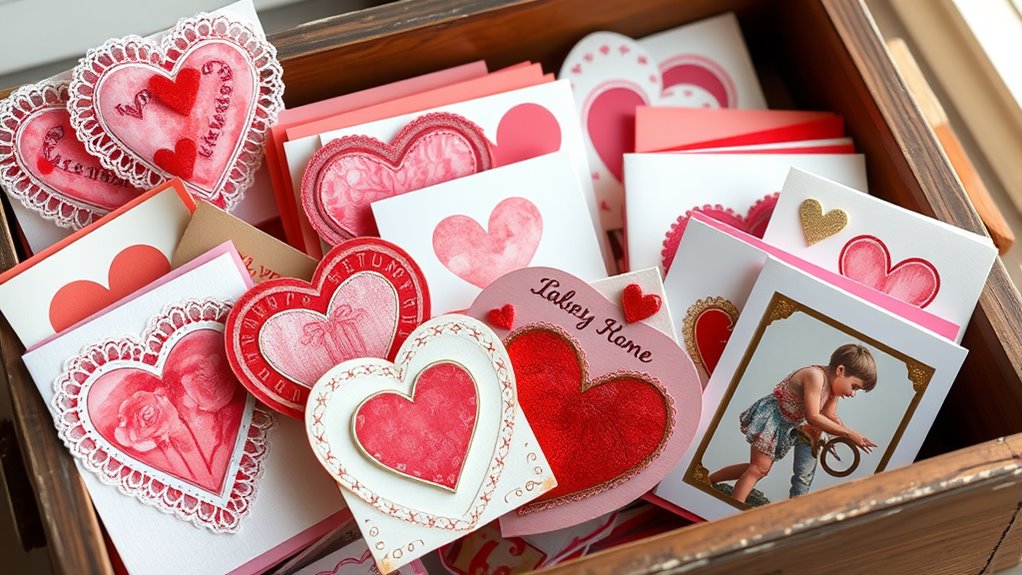

The evolution of Valentine’s Day cards begins with handmade notes dating back centuries, where people exchanged heartfelt, crafted tokens of affection. Over time, intricate illustrations and societal values influenced their design, becoming personal expressions of emotion. The 19th-century invention of mass production made cards affordable and widely available, turning them into symbols of love and connection. If you explore further, you’ll discover how technological advances continue shaping these cherished traditions today.
Key Takeaways
- Early Valentine’s Day cards were handmade, crafted from paper or fabric, carrying personal and emotional significance.
- The 15th-16th centuries saw handmade love notes reflecting societal values and artistic styles.
- 19th-century technological advances enabled mass production, making cards affordable and widely accessible.
- Mass-produced cards featured pre-printed messages and colorful illustrations, expanding the holiday’s reach.
- Modern trends include digital and personalized cards, continuing the tradition of expressing love while reflecting societal changes.
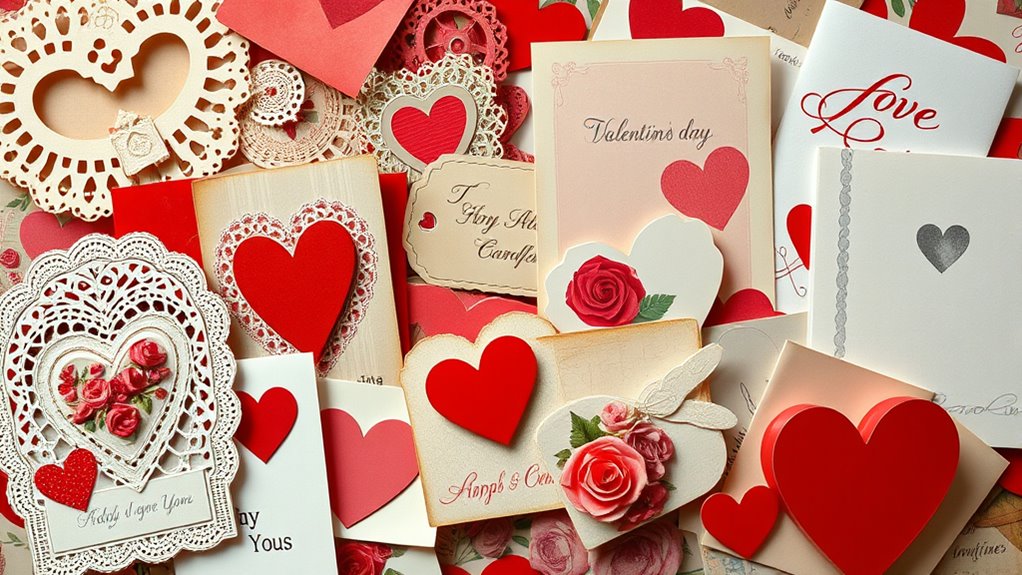
Have you ever wondered how Valentine’s Day cards have evolved over time? The history of greeting cards dates back centuries, and understanding their origins reveals much about their cultural significance. Long before mass-produced cards became the norm, people exchanged handwritten notes and tokens of affection. In the 15th and 16th centuries, handmade love notes and small tokens, often crafted from paper or fabric, served as intimate expressions of affection. These early cards weren’t just simple messages; they carried emotional weight, symbolizing love, admiration, and social bonds. As the tradition grew, so did the desire to beautify these tokens, leading to the creation of intricately illustrated cards that reflected societal values, artistic styles, and personal sentiments. The cultural significance of these early greeting cards was profound—they became a way for people to connect across social boundaries, sharing feelings that might have been difficult to express aloud. Over time, the practice of exchanging cards became woven into the fabric of Valentine’s Day, transforming from a private gesture into a widely celebrated custom.
As printing technology advanced in the 19th century, the production of greeting cards shifted dramatically. Suddenly, the process was no longer limited to skilled artisans; mass production made cards accessible and affordable for the general public. This shift marked a turning point, turning Valentine’s Day cards into something more than personal tokens—into items of popular culture. You could now buy cards in stores, often with pre-printed messages, colorful illustrations, and decorative embellishments. This shift didn’t diminish their emotional impact; instead, it expanded the reach of the holiday, allowing more people to participate in expressing love and affection through these tokens. The mass production of Valentine’s Day cards also reflected broader societal changes, including the rise of consumerism and the democratization of gift-giving. People from all walks of life could now send heartfelt messages without needing artistic skill or personal craftsmanship. Additionally, the development of printing and manufacturing technologies was influenced by advances in drivetrain components, which contributed to the efficiency and scale of production processes. The cultural significance of these cards grew with their availability, transforming them into symbols of love that could be exchanged quickly and easily, yet still carry deep emotional meaning.
Today, the evolution continues with digital cards and personalized messages, but the core idea remains the same: expressing love and affection. From handmade notes rooted in tradition to mass-produced symbols of romance, Valentine’s Day cards have come a long way. They mirror society’s changing values, technological advancements, and the universal desire to connect and celebrate love. Despite the many changes, their cultural significance persists—they’re a timeless way to share feelings and strengthen bonds, no matter how they are designed or delivered.
Frequently Asked Questions
How Did Early Valentine’s Day Messages Differ From Modern Cards?
Early Valentine’s Day messages focused on romantic expressions that used poetic language, often handwritten and deeply personal. You’d find heartfelt sentiments, sincere declarations of love, and creative verses. Modern cards, however, tend to be more casual or humorous, with less emphasis on poetic language. While they still convey romantic expressions, they’re often pre-printed and designed for quick, easy sharing, making the heartfelt touch of early messages less common today.
What Materials Were Used in the Earliest Handmade Valentine’s Cards?
Did you know early handmade Valentine’s Day cards often used just 100% handmade paper? You’d find natural dyes like beetroot, indigo, and turmeric to color them, making each card unique. People carefully crafted these with simple tools, adding personal touches that made each message special. The use of handmade paper and natural dyes gave these cards an authentic, rustic charm that’s still appreciated by collectors today.
When Did Mass-Produced Valentine’s Day Cards Become Commercially Available?
Mass-produced Valentine’s Day cards became commercially available in the early 19th century, around the 1840s. You’ll find that historical marketing played a big role in popularizing these cards, making them accessible to more people. Cultural influences, like Victorian modesty and romantic ideals, shaped their designs. As printing technology improved, mass production expanded, allowing you to send heartfelt messages widely and affordably, transforming Valentine’s Day into a major commercial celebration.
How Have Digital Communication Methods Impacted Valentine’s Day Card Traditions?
Digital communication methods have transformed Valentine’s Day card traditions by replacing physical cards with digital gestures. You now often send virtual messages, emojis, or personalized social media posts, making it quicker and more convenient to express love. Social media platforms enable you to share heartfelt sentiments instantly with a broad audience. This shift encourages more frequent, spontaneous gestures, but it can also lessen the personal touch traditionally associated with handmade or mailed cards.
Are There Regional Variations in Valentine’s Day Card Designs Worldwide?
You notice that Valentine’s Day card designs change wildly across regions, reflecting cultural symbolism and regional aesthetics. In Japan, delicate cherry blossoms and romantic motifs dominate, while in the U.S., bold hearts and playful images thrive. These variations create a tapestry of visual storytelling, revealing how local traditions shape expressions of love. As you explore, you realize each region’s cards tell a unique story, blending universal romance with distinct cultural identity.
Conclusion
As you’ve seen, Valentine’s Day cards have traveled a long road, transforming from delicate, handcrafted notes to bustling machines churning out millions. Like a river carving its course through time, this evolution reflects changing tastes and technology. So, next time you send or receive a card, remember it’s part of a story that flows from heartfelt artistry to quick, mass-produced gestures—each one a small, shining star in the constellation of love.