Around the world, Valentine’s Day features unique customs that reflect each culture’s values. In Japan, women give chocolates, with “giri-choco” for obligation and “honmei-choco” for love, while men reciprocate on White Day. In other places, like Denmark and Finland, people exchange love tokens or friendships gifts. Cultural symbols like colors and social customs deeply influence these traditions. If you continue exploring, you’ll discover even more fascinating ways people celebrate love across different societies.

Get decor and gifts delivered free — and shop member deals
- Fast, free delivery on millions of items
- Access to Prime Big Deal Days deals on October 6–7
- Prime Video, Amazon Music and more included
Key Takeaways
- Japan’s women give “giri-choco” (obligation) and “honmei-choco” (true love) chocolates, with men reciprocating on White Day.
- In South Korea, couples celebrate Valentine’s Day with romantic dates, followed by White Day and Black Day for singles.
- Italy’s Valentine’s Day traditions include romantic dinners and exchanging heartfelt love letters or gifts.
- In Finland, Valentine’s Day is known as “Friend’s Day,” emphasizing friendship and appreciation rather than only romantic love.
- Cultural symbolism, like color choices in gifts, plays a significant role in expressing love across different countries.
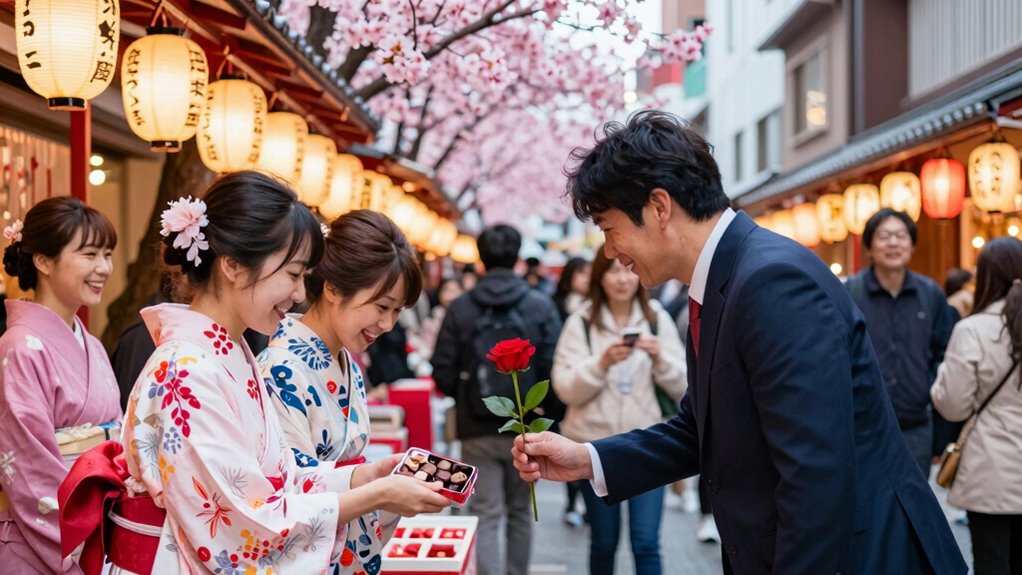
Valentine’s Day is celebrated around the world, but each country has its own unique customs that make the holiday special. As you observe these traditions, you’ll notice how different cultures embrace the day through romantic gift giving and cultural celebrations. In many places, the focus is on expressing love through thoughtful presents, but the way people do it varies widely. In Japan, for example, women typically give chocolates to men, with a distinction between “giri-choco” (obligation chocolates) and “honmei-choco” (true love chocolates). On Valentine’s Day, men often respond a month later during White Day, reciprocating with gifts like candies or jewelry. This exchange highlights a unique cultural celebration centered on romantic gestures that deepen emotional connections. The types of gifts and their significance can also be influenced by color symbolism, which varies across cultures. Additionally, in some cultures, the gift-giving traditions are deeply rooted in history and social customs, adding layers of meaning to these exchanges. For example, the hotels and romantic settings often play a role in many countries’ celebrations, enhancing the overall romantic experience. A deeper understanding of cultural symbolism can help appreciate the significance behind these customs. Furthermore, understanding these cultural nuances can help individuals choose more meaningful romantic gifts to celebrate the day thoughtfully.
As an affiliate, we earn on qualifying purchases.
Frequently Asked Questions
How Did Valentine’s Day Originate Globally?
You might find it interesting that Valentine’s Day’s history origins trace back to ancient Rome, where St. Valentine’s story became a symbol of love and sacrifice. Over time, cultural influences from Christianity and European traditions shaped its celebration. Today, it’s a global event that combines various customs, from exchanging cards to romantic gestures, reflecting how different cultures have embraced and adapted the holiday’s core theme of love and affection.
Are There Any Specific Valentine’s Day Symbols in Different Cultures?
You’ll notice that different cultures use unique symbols for Valentine’s Day, reflecting regional traditions. For example, in Japan, women give chocolates, and symbols like hearts and roses are common worldwide. In South Korea, love locks and cupid figures highlight romantic commitment. These cultural symbols help express love and affection, emphasizing regional traditions that make each celebration special. Recognizing these symbols deepens your appreciation for the diverse ways people celebrate love globally.
What Are Unique Local Valentine’s Day Foods Worldwide?
Imagine you’re in the 16th century, savoring a romantic food that’s still popular today. In Japan, women give men chocolates, including special cultural delicacies like ‘honmei choco’ for loved ones. In South Korea, couples share sweet treats, while in Denmark, marzipan hearts are a favorite. These unique local Valentine’s Day foods highlight how different cultures celebrate love with delicious, symbolic romantic foods that make the day unforgettable.
How Do Different Countries Celebrate Single People on Valentine’s Day?
In many countries, Singles celebrations on Valentine’s Day highlight cultural variations that embrace independence and friendship. For example, Japan celebrates “Junk Day,” where singles gather with friends, while South Korea hosts “Black Day” for single people to enjoy black noodles together. In the US, some embrace Galentine’s Day, focusing on friendships rather than romantic love. These traditions turn the day into a celebration of self-love and meaningful connections beyond romantic relationships.
Are There Any Traditional Valentine’s Day Gift-Giving Customs in Remote Regions?
Imagine a hidden treasure chest where remote region customs hold secret gift exchange rituals. In such areas, people often exchange handcrafted tokens or symbolic gifts, like woven charms or local delicacies, as a way to celebrate love and friendship. These traditions emphasize personal connection over commercialism. You might find that these gift-giving customs are simple yet meaningful, deeply rooted in cultural stories and community bonds, making Valentine’s Day uniquely special.
romantic Valentine's Day jewelry
As an affiliate, we earn on qualifying purchases.
As an affiliate, we earn on qualifying purchases.
Conclusion
No matter where you celebrate Valentine’s Day, it’s clear love’s language is universal. From heartfelt gifts to unique rituals, each tradition paints a picture of affection that crosses borders. Think of these customs as threads weaving a vibrant tapestry of love across the globe. So, embrace the differences, cherish the moments, and let your heart be a beacon, shining brightly in this beautiful mosaic of worldwide romance.
heart-shaped chocolates gift box
As an affiliate, we earn on qualifying purchases.
As an affiliate, we earn on qualifying purchases.
As an affiliate, we earn on qualifying purchases.
Fall Picks
fall essentials
As an affiliate, we earn on qualifying purchases.