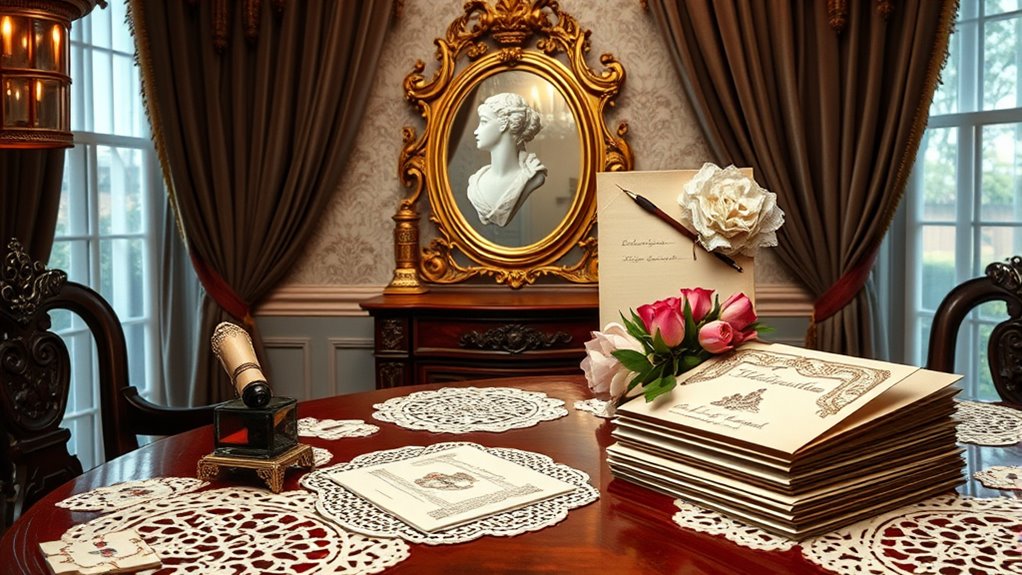

Victorians played a key role in shaping modern Valentine’s Day customs by introducing romantic symbols like hearts, roses, and doves that express love and devotion. They popularized elaborate, decorated cards made with lace and intricate designs, turning cards into meaningful keepsakes. Postal services became an essential part of exchanging heartfelt notes, making the holiday more personal and intimate. If you keep exploring, you’ll discover how these traditions continue to influence how we celebrate today.
Key Takeaways
- Victorian era popularized elaborate, ornate Valentine cards featuring lace, embossing, and intricate illustrations, elevating the holiday’s romantic significance.
- The tradition of sending handwritten love notes and cards fostered intimacy and genuine emotional expression.
- Postal innovations enabled long-distance communication, making Valentine exchanges more personal and meaningful.
- Romantic symbols like hearts, roses, and doves originated during the Victorian period, emphasizing affection and devotion.
- Victorian social etiquette emphasized respectful, thoughtful exchanges, shaping the tone and customs of modern Valentine’s Day celebrations.
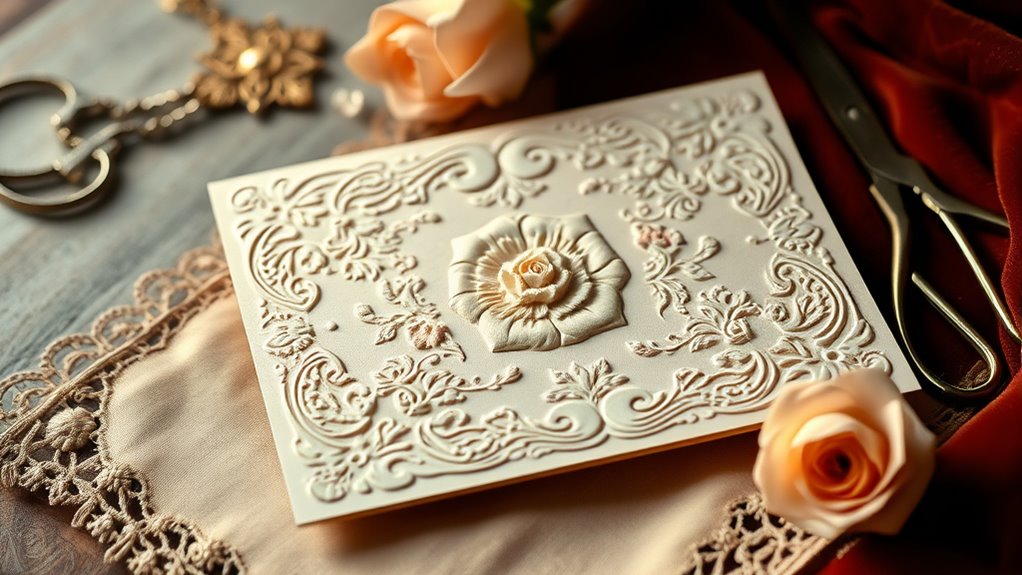
Valentine’s Day as we are familiar with today has roots that stretch back to the Victorian era, a time when the holiday’s traditions began to take shape. During this period, the celebration became more than just a day for exchanging simple tokens; it transformed into an expression of romantic symbolism that emphasized heartfelt sentiment. Victorians placed great significance on conveying love through carefully chosen symbols, like hearts, roses, and doves, which represented affection, purity, and devotion. These symbols weren’t just decorative; they carried meaning that helped lovers communicate feelings that words sometimes couldn’t express. This focus on romantic symbolism laid the groundwork for the modern Valentine’s Day imagery we still recognize today.
At the same time, postal traditions played an essential role in shaping how people celebrated the holiday. Victorians popularized the exchange of handwritten notes and love letters, which became an integral part of their romantic customs. Sending a Valentine’s card was more than a simple gesture; it was an act of intimacy and personal connection. The Victorian era saw the emergence of elaborate, often ornate, Valentine cards, many featuring lace, embossing, and intricate illustrations. These cards became treasured keepsakes, and their postal delivery added an element of anticipation and mystery. Sending and receiving these cards through the postal service created a physical link between lovers, making the exchange of affection tangible and meaningful. It also established a tradition of secrecy and surprise, as recipients eagerly waited for their cherished notes to arrive.
Victorian innovations in postal traditions helped elevate Valentine’s Day from a casual gesture to a more formal and romantic event. The tradition of mailing love notes became widespread, and the development of postal services made it easier for people to connect over long distances. This era’s emphasis on personalized, handwritten messages reinforced the importance of genuine emotion and thoughtfulness in romantic exchanges. As a result, the act of mailing a Valentine’s card became a cherished ritual that continues today, albeit with modern adaptations. Additionally, the Victorian emphasis on social etiquette helped shape the respectful and considerate tone associated with romantic communications that persists in modern customs. The Victorian focus on romantic symbolism and postal traditions laid a foundation that transformed Valentine’s Day into a celebration of love, marked by meaningful symbols and heartfelt messages that still resonate in our modern customs.
Frequently Asked Questions
How Did Victorian Fashion Influence Valentine’s Day Gift Choices?
Victorian fashion heavily influenced Valentine’s Day gift choices by popularizing jewelry and fashion accessories as tokens of affection. You might give or receive Victorian jewelry, like lockets or rings, symbolizing love and commitment. These accessories became romantic gestures, reflecting the era’s emphasis on sentimentality. Today, this tradition persists, and you often choose jewelry or accessories that mirror Victorian elegance, making your gift more meaningful and timeless.
What Role Did Victorian Literature Play in Shaping Romantic Customs?
Victorian literature acts like a mirror reflecting romantic ideals, shaping how you perceive love today. It uses literary symbolism—hearts, roses, and doves—to deepen emotional expression and idealize romance. By romanticizing courtship and emphasizing emotional depth, Victorian writers influence modern customs, making love stories more poetic and meaningful. Their stories encourage you to see love as an enduring, noble pursuit, weaving timeless themes into today’s Valentine’s Day traditions.
Were Victorian Valentine’s Day Cards Personalized or Mass-Produced?
Victorian Valentine’s Day cards were mostly mass-produced, making them widely accessible and affordable. However, some lovers still appreciated personalized touches, adding handmade craftsmanship to their cards for a special feel. You could choose from ready-made designs or customize your own, blending the convenience of mass production with the intimacy of personalized messages. This mix helped shape modern Valentine’s Day customs, balancing tradition with the era’s innovation.
How Did Victorian Social Class Affect Valentine’s Day Celebrations?
You’ll notice that Victorian social class distinctions greatly influenced Valentine’s Day celebrations, as wealthier individuals exchanged more elaborate cards and gifts, while lower classes kept it simple. Gender roles also played a part, with men often expected to initiate romantic gestures, reflecting societal expectations. This divide reinforced social boundaries, making the holiday a display of status and tradition, shaping how different classes participated in the festivities.
Did Victorian Era Beliefs Impact Valentine’s Day Etiquette?
You’d find that Victorian era beliefs deeply influenced Valentine’s Day etiquette, subtly guiding romantic symbolism and courtship rituals. They emphasized modesty and propriety, shaping how lovers expressed affection through carefully chosen gestures. You’re encouraged to use polite language and respectful gestures, reflecting societal values. These customs fostered a sense of decorum, making romantic interactions more meaningful and reserved, aligning with the era’s moral standards and reinforcing the importance of gentlemanly conduct.
Conclusion
As you imagine Victorian valentines, with their delicate lace and heartfelt poems, you see how their traditions still bloom today. The soft glow of candlelit dinners and the whisper of handwritten notes echo their influence, turning February 14th into a celebration of love‘s timeless beauty. You can almost feel the gentle flutter of anticipation and warmth, reminding you that even in modern times, the Victorian spirit of romance continues to inspire and enchant us all.