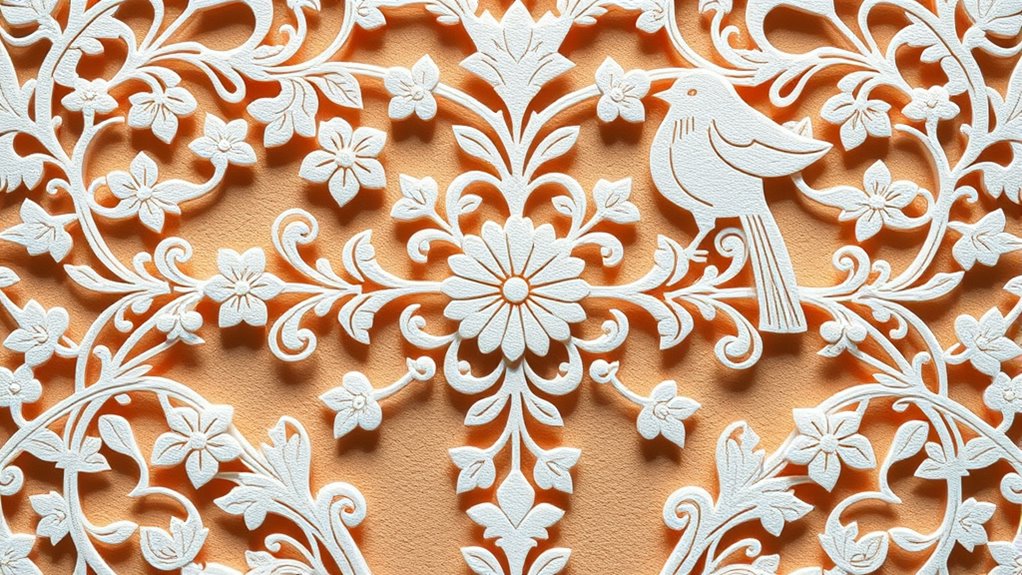

Germany’s Scherenschnitte, or Valentine paper cutting, is a historic craft that dates back to the 16th century, reflecting regional styles and cultural motifs. This intricate art often features romantic, seasonal, or religious themes, created using scissors, knives, and layered techniques. Each piece embodies local traditions and community identity, making it a meaningful expression of heritage. If you continue exploring, you’ll uncover how this delicate craft continues to celebrate love and regional stories today.
Key Takeaways
- Valentine paper cutting in Germany often features romantic motifs like hearts, flowers, and love scenes, reflecting regional styles.
- Traditional Scherenschnitte techniques are used to create intricate, delicate Valentine designs with regional variations.
- German regional styles influence Valentine paper cuts, incorporating cultural symbols and seasonal themes.
- The craft is passed down through families, preserving the heritage of detailed, handcrafted Valentine Scherenschnitte.
- Modern Valentine Scherenschnitte continue to celebrate regional traditions while embracing contemporary artistic expressions.
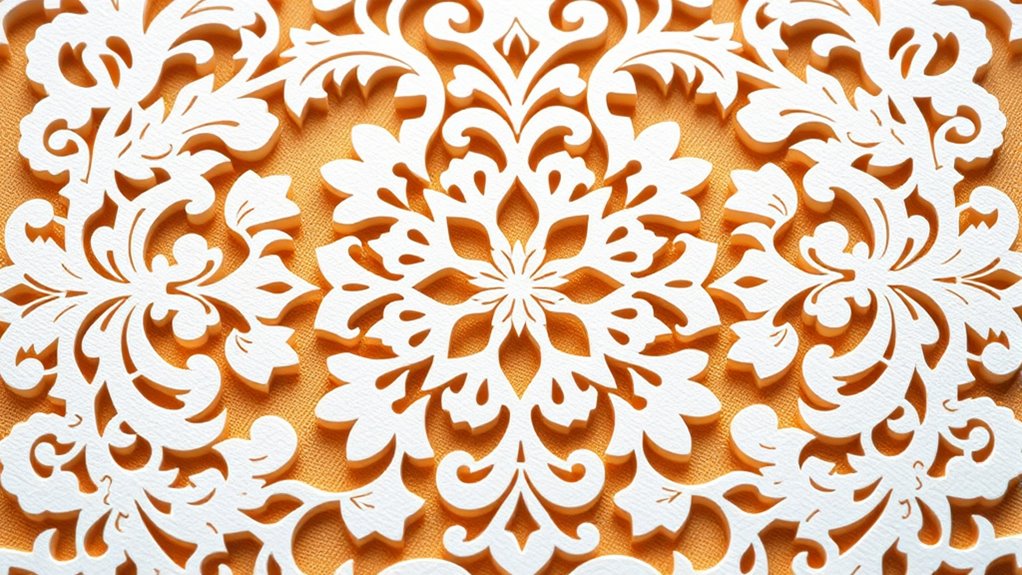
Germany’s Scherenschnitte, also known as paper cutting, is a traditional craft that transforms simple sheets of paper into intricate and delicate artworks. To truly appreciate this art form, you should understand its history origins and regional variations. The roots of Scherenschnitte date back to the 16th century, when German artisans began creating paper cutouts as decorative motifs for religious and festive occasions. Originally, these designs were simple and functional, often used as window decorations, greeting cards, or embellishments for household items. Over time, however, they evolved into highly elaborate art pieces showcasing scenes from daily life, folklore, or religious stories. The technique spread across different regions of Germany, each adding its own distinct style and motifs, which led to the rich diversity you see today.
In southern Germany, especially in Bavaria and Tyrol, you’ll find Scherenschnitte that are characterized by bold shapes and symmetrical patterns. These often feature religious symbols, floral motifs, or scenes from folk traditions, reflecting the deep cultural and spiritual roots of the area. Moving northward, you encounter more delicate and detailed designs, with lace-like intricacy, that showcase a high level of craftsmanship. These regional variations are not just aesthetic; they also tell stories about local customs, seasonal festivals, and community identity. For example, during Christmas, these paper cutouts might depict nativity scenes or winter landscapes, while spring might bring motifs of blooming flowers and birds.
You might also notice differences in technique and materials depending on where you are. Some regions favored more complex, layered cuts, requiring precision and patience, while others kept to simpler silhouettes. The tools used, such as scissors, knives, or specialized craft blades, also varied regionally, influencing the style and complexity of the finished artwork. Many of these regional variations were passed down through generations, often within families or local craft guilds, preserving the traditional techniques while allowing for personal and regional expressions. Additionally, regional craft traditions contributed to the diversity in motifs, techniques, and tools used, enriching the overall heritage of Scherenschnitte. As you explore Scherenschnitte, keep in mind that it’s not just an art form but a reflection of local history, culture, and community life. Every cut and pattern tells a story rooted in regional origins, making each piece a unique *testament* to Germany’s rich craft heritage.
Frequently Asked Questions
How Did Scherenschnitte Originate in Germany?
You might find that the historical origins of scherenschnitte trace back to 16th-century Germany, where paper cutting became a popular folk art. Its cultural significance grew as people used intricate designs to celebrate festivals, religious events, and personal milestones. You can see how this craft reflects German heritage, with delicate patterns symbolizing good luck, love, and community, making it a cherished tradition passed down through generations.
What Materials Are Traditionally Used for Valentine Paper Cuts?
You’ll find that traditional Valentine paper cuts mainly use delicate, high-quality paper like parchment or handmade paper, chosen for their fine detail and ease of cutting. Notably, craft tools such as small scissors and craft knives are essential for precision. Material selection is vital, as it impacts the intricate designs, and skilled artisans carefully choose tools to bring their heartfelt creations to life with delicate, precise cuts.
Are There Regional Variations in Scherenschnitte Styles Across Germany?
You’ll notice regional influences create notable style diversity in German scherenschnitte. In southern regions like Bavaria, the designs tend to be more intricate and ornate, reflecting local traditions. Meanwhile, in northern areas, the cuts are often simpler and more geometric. These regional variations develop from local cultural symbols and craft techniques, making each area’s style unique and adding richness to Germany’s paper cutting heritage.
How Has Modern Technology Influenced Traditional Paper Cutting Art?
Modern technology acts like a guiding lantern, illuminating traditional paper cutting art. You can now access digital tools and online tutorials that expand your creative horizons and preserve age-old techniques. These innovations make learning easier and more accessible, allowing you to experiment with new patterns and styles. As a result, technology breathes new life into the craft, connecting you with a global community and ensuring the art’s vibrant future.
Can Beginners Easily Learn Scherenschnitte Techniques?
Yes, beginners can easily learn scherenschnitte techniques. Start with simple techniques and beginner projects, which help you build confidence and develop your skills. Using basic scissors and simple patterns, you can create beautiful paper cuttings quickly. As you gain experience, you can experiment with more intricate designs. Patience and practice are key, so don’t rush—enjoy the process and watch your craft improve over time.
Conclusion
As you explore Germany’s Scherenschnitte, you’ll find it’s like stepping into a delicate world of paper lace and intricate designs. This art form captures centuries of tradition, weaving stories and symbolism into each cut. Just as a spider spins its web with precision, you’ll see how patience and skill bring these paper masterpieces to life. Embrace the beauty of this craft, and let it inspire your own creativity to craft something truly special.