
TL;DR

Get decor and gifts delivered free with Prime
- Fast, free delivery on millions of items
- Prime Video, Amazon Music and more included
- Member-only deals all year
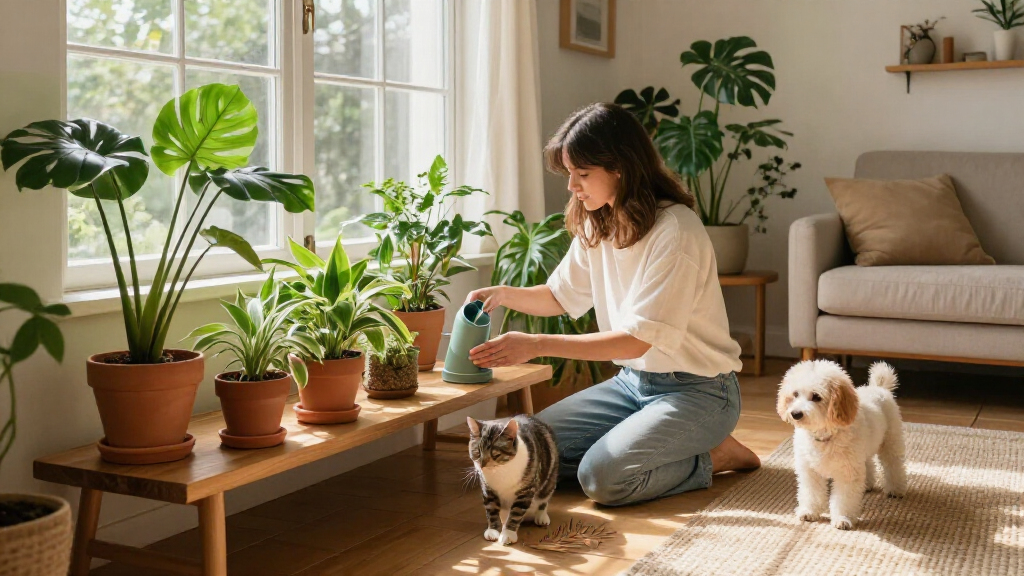
Ideal Home has highlighted six indoor plants it describes as pet-friendly: spider plant, Kentia palm, calathea, Chinese money plant, Boston fern and polka dot plant. The report cautions that “pet-friendly” does not mean pet-proof: eating a large amount of any plant can cause irritation or stomach upset.
Ideal Home has identified six houseplants it describes as safe for homes with cats and dogs, including spider plants, Kentia palms and Boston ferns. The report offers pet owners options for adding indoor greenery, but stresses that no plant is entirely pet-proof and that eating a large amount can still irritate a pet or upset its stomach.
The six plants in the report are the spider plant, Kentia palm, calathea, Chinese money plant, Boston fern and polka dot plant. Ideal Home attributes its pet-safety guidance to plant experts Jo Lambell, founder of Beards & Daisies, and Nick Wood of GardeningExpress.co.uk. The supplied material does not cite an independent veterinary or poison-control assessment for the list.
The choices vary in appearance and care needs. The report describes the spider plant as easy to care for and propagate, while the taller Kentia palm is suggested for a hallway or living-room corner and is said to cope with lower light. Calatheas are included for their patterned foliage; the Chinese money plant has round leaves and is recommended for bright, indirect light, with the soil allowed to dry slightly between waterings.
The Boston fern is described as suited to humid spaces such as bathrooms. The polka dot plant offers spotted foliage and, according to Wood, does best in bright, indirect light with lightly moist soil. Ideal Home also advises pinching its stems to encourage fuller growth. These are care recommendations from the report, not guarantees that a plant will thrive in every home.
More Greenery, With Pet Precautions
The list gives cat and dog owners a starting point for choosing indoor plants without relying on the assumption that all greenery presents the same risk. It also separates plant selection from supervision: the report’s experts say pets may chew plants, and even varieties described as pet-friendly can cause problems if eaten in bulk.
That distinction matters because “safe” can be read as a promise that a plant cannot cause harm. Ideal Home’s own caveat is narrower: these plants are presented as non-toxic or pet-friendly, but eating plant material may still cause physical irritation or stomach upset. Owners should monitor pets that chew regularly and seek veterinary advice if they are concerned about an animal’s symptoms or what it has eaten.
Popular right now

Samsung 55-Inch Neo QLED 4K TV with WireLogic 8-Foot Ultra High Speed HDMI Cable

Vitamix Touch & Go Advance 32-Ounce Bar Blender, White

KitchenAid Classic Series 4.5-Quart Tilt-Head Stand Mixer, Onyx Black
As an affiliate, we earn on qualifying purchases.
How the Six Plants Differ
Ideal Home’s article is a practical houseplant guide, not a report of new veterinary research or a change to an official safety standard. It combines plant-care descriptions with comments from Lambell and Wood. The source names the six plants and offers basic light and watering guidance, but does not provide study details, toxicity testing methods or a formal risk ranking.
Some details are framed as customary beliefs or expert observations rather than established health findings. For example, the Chinese money plant is said to bring luck and prosperity, and the Boston fern is associated with good health. The source also says some experts claim Boston ferns may help reduce condensation and damp, but supplies no evidence or measurements for that claim. Those statements should not be confused with the report’s central list of plants described as pet-friendly.
“Even pet-safe plants can upset a tummy if they’re eaten in bulk, so it’s worth keeping an eye on any serial chewers.”
— Jo Lambell, founder of Beards & Daisies, as quoted by Ideal Home
Limits of the Pet-Safety Advice
The supplied source does not specify how the six plants’ safety was assessed, what quantities might cause symptoms, or whether risk differs by pet size, age or health. It also does not include a veterinarian’s review or link to a toxicology database. The list should therefore be understood as Ideal Home’s guidance attributed to plant experts, rather than a detailed medical assessment.
The report warns that any plant may cause physical irritation if too much is eaten, but it does not describe symptoms, treatment or emergency thresholds. It is also unclear from the source whether every cultivar or variety within each plant group has the same risk profile. Owners should check a plant’s identity and consult a veterinarian or an appropriate animal poison service if a pet eats it and becomes unwell.
Check Plants Before Bringing Them Home
The report does not announce a follow-up study or scheduled update. For pet owners acting on its recommendations, the next step is to verify the plant’s identity and care needs with a reputable seller or another reliable reference, then place it where a pet is less likely to chew or dig in the soil. Hanging planters or protective pot grids are among the practical accessories mentioned by Ideal Home, though they do not replace supervision.
If an animal repeatedly chews plants, owners can monitor access and ask a veterinarian for advice. The source’s bottom line remains that these six plants are presented as pet-friendly choices, not as plants that pets should be encouraged to eat.
Key Questions
Which six houseplants does Ideal Home describe as pet-friendly?
The list names the spider plant, Kentia palm, calathea, Chinese money plant, Boston fern and polka dot plant.
Does pet-friendly mean a plant cannot make a cat or dog sick?
No. The article warns that eating too much of any plant may cause irritation or stomach upset. It advises keeping an eye on pets that chew plants.
Which of the listed plants suits a lower-light spot?
Ideal Home quotes Jo Lambell describing the Kentia palm as able to cope with lower light. The report does not say that it will thrive in every dim location.
What care does the report recommend for a polka dot plant?
Nick Wood recommends bright, indirect light and soil kept lightly moist. He also advises pinching back the stems to encourage a fuller shape.
What should I do if my pet eats a houseplant?
The source does not give treatment instructions. If your pet becomes unwell or you are concerned about what it ate, contact a veterinarian or an appropriate animal poison service and identify the plant if possible.
Source: rss