
TL;DR

Get decor and gifts delivered free with Prime
- Fast, free delivery on millions of items
- Prime Video, Amazon Music and more included
- Member-only deals all year
A Hunker report describes a DIY outdoor bar built by YouTuber WetAndForget from matching reclaimed wood pallets and concrete pavers. The project can be sized and decorated for a patio, but the source gives no verified total cost, and builders must check the pallets, connections and base for safety.
A DIY backyard bar made from reclaimed wood pallets and topped with concrete pavers is drawing attention as a way to repurpose materials into an outdoor serving space. Hunker reported that YouTuber WetAndForget built the compact design, which can be adapted to fit a patio or covered entertaining area, though the report does not provide a verified project cost.
The basic build uses at least two matching pallets in sound condition, exterior wood screws, exterior paint with primer, and concrete pavers for the countertop. The report also lists landscape construction adhesive rated for both wood and concrete, along with a drill, sander, cleaning cloth, paintbrush and clamps. The pallet size and the number of pavers depend on the dimensions chosen.
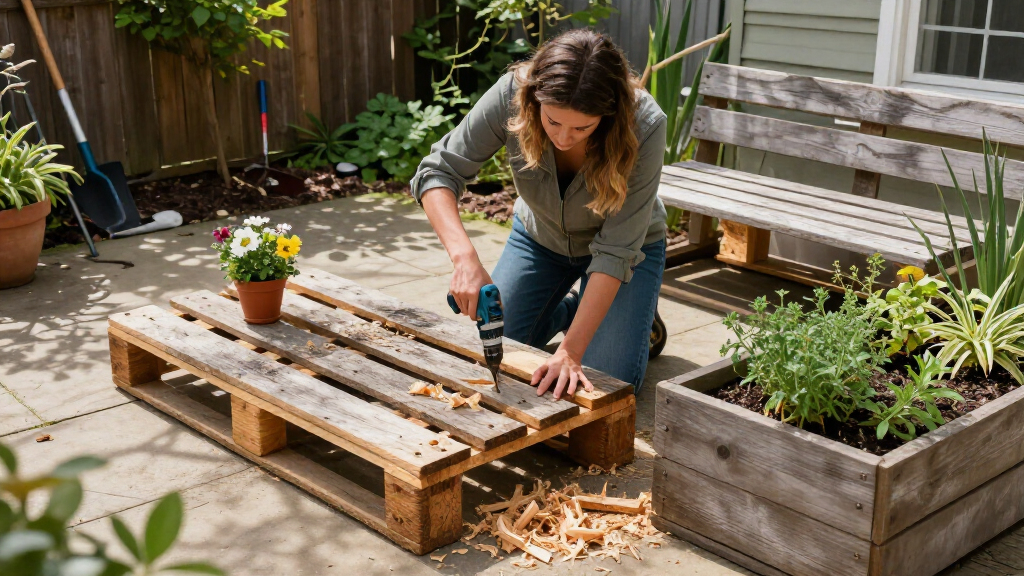
To assemble it, the builder cleans and sands the pallets, paints them for outdoor use, then stands them upright with their backs together. Their edges are aligned and clamped before the inner boards are joined with exterior screws. The report says WetAndForget used at least three screws per connecting board, while noting that the number may vary. The assembled base should be level and stable before the pavers are attached.
The pavers are first laid across the top to check their fit and limit overhang. Each is then lifted, adhesive is applied, and the paver is pressed into place. The adhesive must dry fully before the surface carries heavy items. For a longer bar, the report recommends building another unit and joining it through sturdy supports so that each section supports its own pavers, rather than leaving pavers across an unsupported gap.
A Lower-Cost Alternative, With Limits
The design offers a practical way to turn reclaimed materials into usable outdoor furniture, while allowing the finished bar to be sized and painted to suit a particular space. It may also avoid the price of some store-bought outdoor bars, which Hunker says can cost several hundred dollars before décor or supplies are added.
That comparison is not a demonstrated saving for this specific build. The report gives no itemized budget, local material prices or estimate for tools, adhesive and finishing supplies. The paver top also adds substantial weight, so the project’s affordability does not remove the need to check the structure’s condition and capacity. The suggested decorations, including hooks, a bottle opener or LED lighting, are optional additions rather than requirements for the basic build.
As an affiliate, we earn on qualifying purchases.
How the Pallet Design Fits
Outdoor bars are one option for creating a dedicated serving area, but buying a ready-made unit can add to the cost of furnishing a patio. The project described by Hunker uses two pallets as the main structure and pavers as the working surface, combining materials that may be available through reuse or purchase.
The design is presented as adaptable: builders can choose a paint color, add a stencil to the front, or extend the arrangement with a second unit. The report does not identify the pallets’ origin or specify a particular model, dimensions or paver type. Its instructions are therefore a general description of the build, not a tested construction plan for every pallet or site.
“WetAndForget uses at least three screws per connecting board, but this might vary.”
— Hunker, on the screw count used in the video
concrete pavers for outdoor countertop
As an affiliate, we earn on qualifying purchases.
As an affiliate, we earn on qualifying purchases.
Cost and Load Capacity Remain Unknown
The source does not state the project’s total cost, the time needed to complete it, or whether the creator tested the bar under a specified load or outdoor conditions. It also does not give engineering specifications for the pallets, screws, adhesive or pavers. Pallet condition and construction can differ, so the report’s example does not establish that every pallet-based version will be safe or durable.
Before building, users should reject pallets showing rot or contamination and check that the structure is steady, level and capable of carrying the pavers and intended items. The report does not identify a particular adhesive product or say how long it takes to cure; users should follow the product’s instructions and wait for full curing before loading the top.
outdoor furniture screws and hardware
As an affiliate, we earn on qualifying purchases.
As an affiliate, we earn on qualifying purchases.
Check Materials Before Building
The next step for anyone considering the project is to inspect and measure the available pallets and pavers, then confirm that the assembled structure can support their weight. The bar should be placed on level ground, and the adhesive must be fully dry before use. Builders can then decide whether to add a second supported section or personalize the front with paint, hooks or lighting. Hunker’s report does not announce a follow-up test, cost breakdown or further update from WetAndForget.
weatherproof exterior paint for wood
As an affiliate, we earn on qualifying purchases.
As an affiliate, we earn on qualifying purchases.
Key Questions
What materials does the pallet bar require?
The report lists at least two matching pallets, concrete pavers, exterior wood screws, exterior paint with primer and construction adhesive compatible with both concrete and wood. It also names basic tools including a drill, sander, clamps, cloth and paintbrush.
Does the project cost less than a store-bought bar?
Hunker presents it as a potentially budget-friendly option and says some store-bought outdoor bars cost several hundred dollars. It provides no total cost or itemized comparison for the DIY version, so actual savings are unknown.
Can the bar be made longer?
The report suggests adding a second matching pallet unit and connecting the units through sturdy supports. Each section should support its own pavers; the instructions caution against leaving countertop pieces across an unsupported gap.
What safety checks does the report recommend?
Use pallets with no signs of rot or contamination, sand rough edges, and make sure the base is stable and level before attaching the pavers. Because the pavers add considerable weight, check that the pallet structure and its connections can support the load, and wait for the adhesive to cure fully.
Source: rss
Halloween Picks
halloween
As an affiliate, we earn on qualifying purchases.