
TL;DR

Get decor and gifts delivered free with Prime
- Fast, free delivery on millions of items
- Prime Video, Amazon Music and more included
- Member-only deals all year
A Hunker report describes using baking soda to help reduce mild odors on some fabric couches, while stressing that it does not remove the stain or spill causing the smell. Check the couch care label, test a hidden area, and vacuum the powder thoroughly; leather, delicate fabrics and persistent odors may need another approach.
A Hunker report says baking soda may help reduce mild odors on some fabric couches, but users should first check the upholstery care label and test a hidden spot. The method is not a substitute for removing a spill or stain, and persistent smells such as pet urine may require professional cleaning.
The report recommends starting with the couch’s care label, which may be under a cushion or on the furniture’s underside. Its cleaning code indicates what the fabric can tolerate: a “W” generally permits water-based cleaners, while an “X” typically means vacuuming or brushing only. The report advises following the label and testing baking soda on an inconspicuous area before applying it more widely. A patch test should last as long as the planned treatment, particularly if the powder will remain overnight.
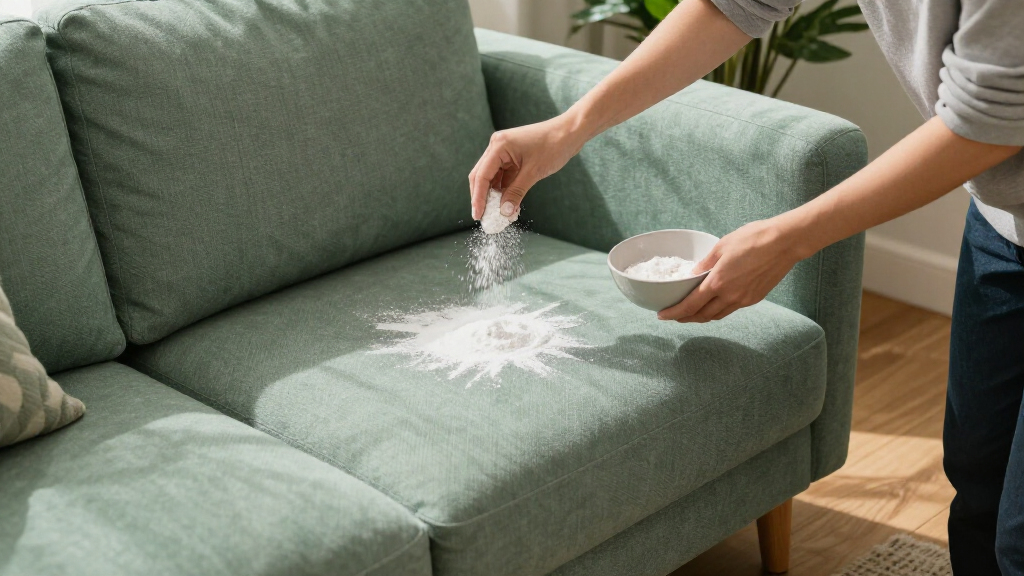
For a couch that passes the test, remove cushions and loose items, check between seams for small objects, and vacuum the upholstery. Once the fabric is dry, apply a light, even layer of baking soda without rubbing it in. Leave it for at least 20 to 30 minutes; the report says it can remain for several hours or overnight for stronger odors if the longer-duration patch test has also passed. Keep children and pets away from the treated couch.
Afterward, vacuum the powder from the upholstery, including seams and both sides of cushions, and repeat if residue remains. The report warns against using this approach on leather, imitation leather, silk or delicate vintage furniture, which baking soda could dry out, damage or discolor. It may also be difficult to remove from deep-pile fabrics and seams.
A Freshening Method With Limits
The guidance matters because treating an odor is not the same as cleaning its source. Baking soda may help with some smells, but the report says it does not remove the spill or stain that caused them. Applying powder without addressing a visible spill could leave the underlying problem in place.
Checking the label and patch-testing first can also help avoid damage to upholstery. The method is best treated as a limited option for compatible, dry fabric—not a universal couch cleaner. For a stronger or lingering odor, particularly one linked to pet urine, the report points to professional cleaning as a possible need.
baking soda for fabric couch odor removal
As an affiliate, we earn on qualifying purchases.
As an affiliate, we earn on qualifying purchases.
Care Codes Guide Couch Cleaning
The report places baking soda among household options for reducing odors, alongside its more familiar uses for absorbing spills or gentle scrubbing. Upholstery, however, differs from one couch to another, so the label’s cleaning code is a key constraint. A “W” code signals that water-based treatment may be allowed; an “X” code calls for vacuuming or brushing rather than wet cleaning. The report’s guidance is to use the label to judge whether the fabric can be treated, then patch-test the powder itself.
The method described is a dry treatment: prepare and vacuum the couch, apply baking soda, wait, then vacuum again. It is not a claim that baking soda disinfects upholstery or works on every odor. The source does not provide comparative testing or a measured success rate; it presents the method as a household cleaning tip for eligible fabric.
““Baking soda addresses odor, but it can’t clean the upholstery to remove the cause of the odor, such as stains or spills.””
— Hunker report
As an affiliate, we earn on qualifying purchases.
Results Depend on Fabric and Odor
The report does not establish how much odor baking soda will remove from a particular couch or how long the effect will last. Results may depend on the fabric, the odor’s source and whether the smell has penetrated the upholstery. It says some odors may remain and that pet urine may require professional treatment. The source also gives no product-specific testing or guarantee that a patch test will identify every possible issue across an entire piece of furniture.
As an affiliate, we earn on qualifying purchases.
Check Before Treating the Couch
Before applying baking soda, locate and read the care label, check that the fabric is dry, and test a hidden area for the same amount of time planned for the full treatment. If the label limits cleaning to vacuuming or brushing, or the material is leather, imitation leather, silk or delicate vintage upholstery, do not use the powder method described in the report. For a visible spill, use a cleaner appropriate to the fabric; for an odor that persists, seek professional advice or cleaning.
pet odor removing spray for couches
As an affiliate, we earn on qualifying purchases.
As an affiliate, we earn on qualifying purchases.
Key Questions
What is baking soda meant to do on a couch?
The Hunker report describes it as a way to help reduce some upholstery odors. It does not remove the spill or stain causing the smell.
How long should baking soda stay on fabric upholstery?
The report recommends leaving a light layer undisturbed for at least 20 to 30 minutes. Several hours or overnight may be considered for stronger odors, but first test a hidden area for the same length of time.
Can baking soda be used on leather or silk couches?
The report advises against using it on leather, imitation leather, silk and delicate vintage furniture, because it may dry out, damage or discolor those materials.
Will baking soda remove pet urine odor?
Not necessarily. The report says smells that have soaked into the fabric, including pet urine odors, may need professional cleaning.
What should I do after applying the powder?
Vacuum the couch thoroughly, including seams and all sides of the cushions. Make a second pass if any baking soda remains, and keep children and pets away while the powder is on the furniture.
Source: rss
Evergreen bestsellers Picks
bestsellers
As an affiliate, we earn on qualifying purchases.