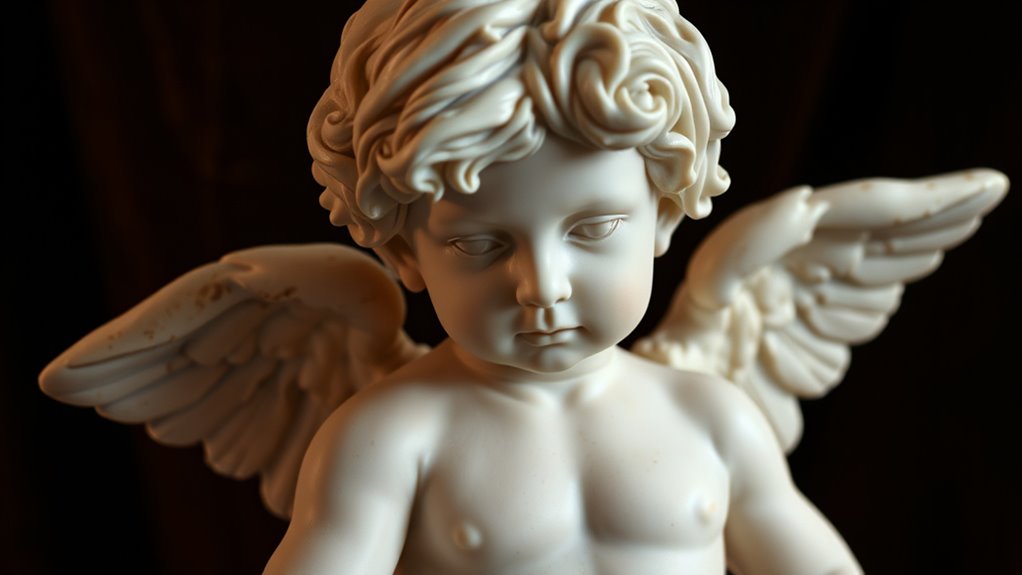
Cupid originates as Eros, a Greek god of desire symbolized by a young boy with a bow and arrows that spark love or indifference. Over time, his image softened from a divine authority to a playful, cherubic figure representing love’s whimsy. Today, he’s a universal symbol of romance and affection, appearing in everything from Valentine’s Day cards to digital icons. If you explore further, you’ll uncover how Cupid’s story continues to shape our understanding of love’s special magic.
Key Takeaways
- Cupid, known as Eros in Greek mythology, originated as a divine god of desire and love’s unpredictable force.
- His depiction evolved from a serious deity to a playful cherub symbolizing love’s whimsy.
- Mythologically, Cupid’s arrows could ignite or extinguish love, representing love’s mysterious and divine power.
- Today, Cupid is a cultural icon associated with Valentine’s Day, embodying affection, joy, and playful romance.
- Modern digital platforms have expanded Cupid’s influence, making his symbol a universal representation of love across ages.

Throughout history, Cupid has remained a powerful symbol of love and desire, evolving from ancient myth into modern cultural icon. You might think of Cupid as the playful cherub with wings, but his origins run much deeper, rooted in stories from ancient civilizations. In the context of the ancient myth, Cupid was seen as a divine being, often depicted as a young boy or an archer whose arrows could make anyone fall in love. This mythological figure represented more than just romantic attraction; he embodied the unpredictable and sometimes chaotic nature of love itself. Over time, the image of Cupid transformed from a serious deity in ancient stories to a more approachable, whimsical figure in modern symbolism. As societies evolved, so did the portrayal of Cupid, reflecting changing attitudes toward love and affection. In ancient myth, Cupid, known as Eros in Greek tradition, was considered a fundamental force in the universe. As a primordial god, he was associated with desire, attraction, and the creation of bonds between people. His arrows, often depicted as golden or leaden, had the power to ignite intense feelings of love or, conversely, indifference. These stories emphasized love’s mysterious and uncontrollable qualities, portraying Cupid as an agent of both joy and chaos. This mythological origin gave him a sense of divine authority, positioning love as a divine force that could alter destinies and shape human experiences. Today, you see Cupid’s image everywhere, from Valentine’s Day cards to jewelry and advertising. This shift in modern symbolism reflects a more lighthearted, accessible view of love. Instead of a divine being wielding formidable power, Cupid is now a cheerful, mischievous figure who embodies affection, playfulness, and the joy of romance. His image as a cherub with a bow and arrow has become a universal shorthand for love’s whimsy. The transformation into modern symbolism doesn’t diminish his significance; rather, it democratizes the concept of love, making it relatable and approachable for everyone. You’re encouraged to see Cupid not just as an ancient myth but as a symbol that celebrates love’s universal appeal. Whether as a divine force or a charming figure, Cupid continues to remind you of the unpredictable, joyful, and sometimes mischievous nature of love across the ages. Additionally, modern digital platforms have further expanded Cupid’s influence, making him a symbol of love in online dating and social media.
Frequently Asked Questions
How Has Cupid’s Symbolism Evolved Over Different Cultures?
You see that Cupid’s symbolism has changed across cultures, rooted in Roman mythology where he’s a mischievous god of love. Over time, different societies adapted his image, making him a universal symbol of romantic longing and desire. In some cultures, he’s seen as a playful child, while in others, he embodies the divine power behind love relationships. These variations highlight how Cupid’s cultural symbolism evolves, reflecting diverse beliefs about love and passion.
Are There Any Famous Artworks Depicting Cupid Throughout History?
You’ll find numerous famous artworks depicting Cupid throughout history. Ancient sculptures, like those from Greek and Roman times, showcase Cupid as a playful, youthful figure. In Romantic paintings, you see Cupid often portrayed as a symbol of love and passion, such as in works by Botticelli or Rubens. These pieces highlight Cupid’s enduring role in art, capturing his timeless connection to love and desire.
What Are Some Common Misconceptions About Cupid?
Think of Cupid as more than just a mischievous child with a bow; many believe he’s solely about romantic love. In reality, misconceptions about Cupid often ignore his origins, which trace back to ancient mythologies symbolizing desire and divine intervention. You might assume he’s only about romance, but he’s also connected to broader themes like fate and passion. Recognizing these truths helps you see Cupid as a complex symbol, not just a playful angel.
How Is Cupid Related to Other Mythological Love Gods?
You see, Cupid is related to other mythological love gods like the Greek Eros and the Roman god Amor. As a Roman god, Cupid shares similarities with Greek deities, blending qualities of Eros, the Greek god of love, and Amor, the Roman love god. These gods symbolize desire and attraction, reflecting different cultural views on love, but all serve the same role of inspiring romantic feelings.
Are There Modern Festivals or Celebrations Honoring Cupid?
Imagine Cupid’s arrow striking during modern celebrations—yes, there are festivals honoring him today. On Valentine’s Day, you see Cupid’s image in cards, decorations, and gifts, making him a symbol of love. People participate in themed parties and events that celebrate romance, keeping Cupid’s legacy alive. These traditions blend ancient myth with contemporary love symbols, reminding you that love’s magic continues to inspire across ages.
Conclusion
Now that you’ve uncovered Cupid’s ancient origins and evolving meanings, you realize he’s more than just a tiny angel with a bow—he’s the unstoppable force behind love’s chaos and beauty. His influence is so powerful that, without him, the universe might collapse into loneliness and despair. Cupid’s timeless presence guarantees that love, in all its wild, unpredictable glory, continues to shape your world, making him the most legendary figure in history’s grandest romance saga.