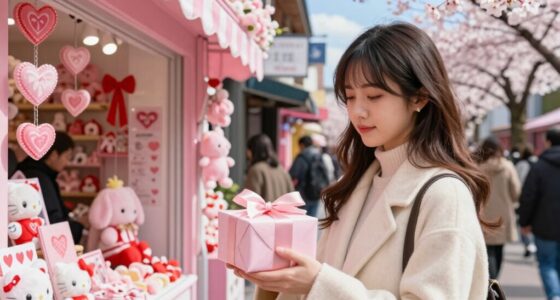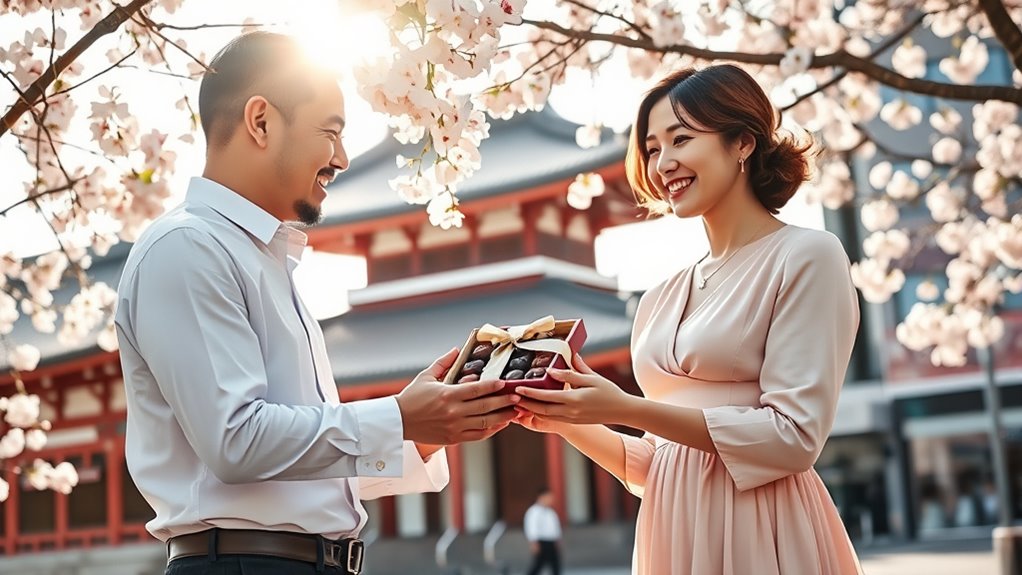

In Japan and Korea, White Day is celebrated exactly one month after Valentine’s Day, when men return the favor by giving gifts to women who gifted them chocolates or small presents. Typically, men choose candies, jewelry, or accessories to show appreciation and maintain social harmony. This tradition emphasizes reciprocity and respect, reinforcing societal values. To understand how this cultural practice strengthens relationships and fits into social norms, keep exploring the significance behind White Day.
Key Takeaways
- White Day occurs exactly one month after Valentine’s Day, typically on March 14th in Japan and Korea.
- Men reciprocate women’s Valentine’s Day gifts by giving chocolates, candies, or jewelry.
- The tradition emphasizes social harmony, respect, and mutual appreciation through gift exchanges.
- Gift choices vary based on relationship and intent, reflecting sincerity and thoughtfulness.
- White Day reinforces societal norms of reciprocity, gratitude, and maintaining harmonious social bonds.
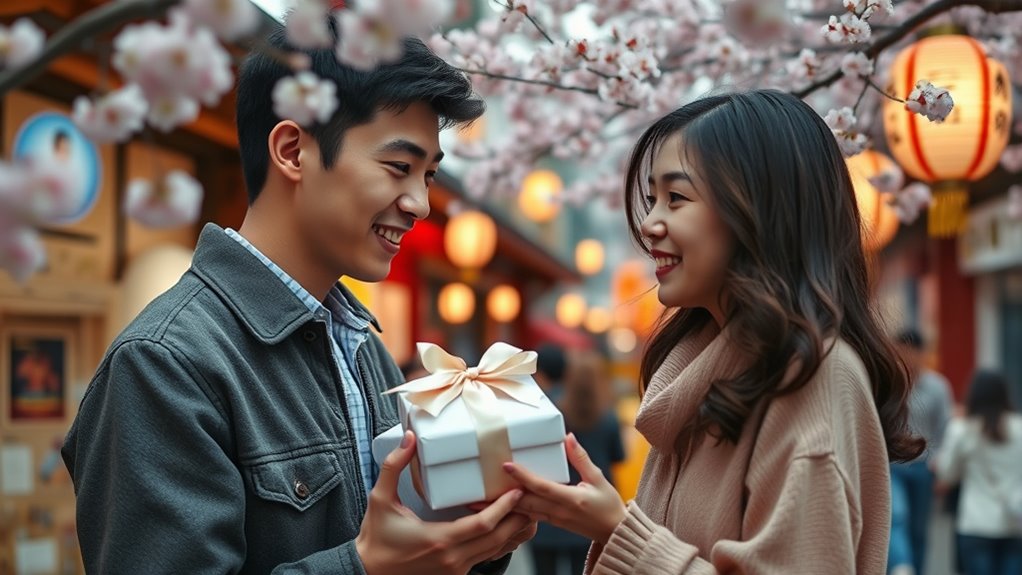
Have you ever wondered why White Day is celebrated in Japan and Korea just a month after Valentine’s Day? It’s a fascinating part of their cultural traditions, rooted in specific gift giving customs that highlight the importance of reciprocity and social harmony. On Valentine’s Day, women typically give chocolates or small gifts to men, expressing affection or appreciation. But White Day flips the script, giving men the opportunity to return the favor and show their gratitude. This exchange isn’t just about exchanging presents; it carries deep cultural significance that reflects societal values of politeness, respect, and mutual consideration.
White Day in Japan and Korea celebrates reciprocity and social harmony through meaningful gift exchanges.
In Japan and Korea, gift giving customs are more than simple exchanges—they’re a way to reinforce social bonds. When men give gifts on White Day, they’re acknowledging the effort women made on Valentine’s Day and reciprocating to maintain harmony in their relationships. The gifts can vary from candies and chocolates to more elaborate presents like jewelry or accessories, depending on the relationship’s nature and the giver’s intentions. This act of returning favors isn’t just about the material gift; it symbolizes a gesture of appreciation and sincerity, strengthening personal and social connections.
The cultural significance of White Day extends beyond individual relationships. It emphasizes the importance of reciprocity, where giving and receiving are seen as a balanced exchange that upholds social cohesion. Men are expected to give gifts that are proportionate to what they received, often choosing items that are thoughtful and appropriate to the recipient’s preferences. This practice underscores the societal value placed on consideration and the maintenance of harmonious relationships. It also reinforces gender roles and expectations, where men are seen as responsible for initiating or reciprocating gestures of affection.
Moreover, the timing of White Day reinforces the cultural idea of balance and order. Celebrated exactly one month after Valentine’s Day, it provides a structured opportunity for men to respond, ensuring that the cycle of gift giving remains consistent and meaningful. The gifts exchanged are often accompanied by words of appreciation, further emphasizing the emotional and cultural importance of the act.
In essence, White Day’s gift giving customs and cultural significance serve as a reflection of societal norms that prioritize respect, gratitude, and social harmony. It transforms a simple act of giving into a meaningful tradition that strengthens bonds and upholds cultural values. So, next time you see someone exchanging gifts on White Day, remember it’s more than just a holiday—it’s a beautiful expression of mutual respect and societal cohesion deeply embedded in Japanese and Korean cultures.

Leonidas Belgian White Chocolate Gift Box – 30 pcs. (1 lb / 453 g) – Birthday Thank You Anniversary Congratulations Gift Basket Gold Ribbon Gourmet Candy Assortment
This exquisite white chocolate assortment comes from the notorious Belgian chocolatier, Leonidas. Since 1913, Leonidas has delivered customers…
As an affiliate, we earn on qualifying purchases.
As an affiliate, we earn on qualifying purchases.
Frequently Asked Questions
How Did White Day Originate Historically in Japan and Korea?
You see, White Day originated as a way to follow Valentine’s Day, which itself has roots in Western traditions. In Japan and Korea, this day was created to align with cultural gift customs, where men return the favor by giving women white chocolates or candies. It formalizes the exchange of appreciation, making it a special day for reciprocation, and reflects the evolving social norms around gift-giving and romantic gestures.
Are There Specific Traditional Gifts Associated With White Day?
White Day is like a blank canvas for expressing gratitude, and traditional gifts include chocolate gifts and jewelry presents. You might give elegant chocolates or delicate jewelry to show appreciation. These gifts symbolize sincerity and thoughtfulness, strengthening relationships. By choosing these tokens, you participate in a meaningful exchange that celebrates mutual kindness, making the day memorable and special for both you and your loved ones.
How Do Cultural Differences Influence White Day Celebrations?
Cultural differences shape White Day celebrations by reinforcing gender roles and increasing commercial influence. In some cultures, men feel expected to reciprocate gifts, which reinforces traditional gender expectations. Commercial interests also drive the holiday, encouraging gift-giving and spending. You might notice the emphasis on specific gifts or the timing, which reflect cultural norms around romance and reciprocity, all influenced by societal values and marketing strategies.
Is White Day Celebrated Similarly in Other Asian Countries?
You’ll find that White Day isn’t widely celebrated in many other Asian countries. Unlike in Japan and Korea, where Valentine’s customs involve specific gift-giving traditions, most countries focus on general romantic gestures rather than formalized days. In some places, people might exchange small presents or chocolates, but the structured gift-giving traditions and the timing of White Day are unique to Japan and Korea, making the celebration quite different elsewhere.
What Are Popular Modern White Day Gift Trends?
Think of White Day gift trends as a blooming garden of romance. You’ll find chocolate gift ideas like artisanal chocolates or personalized boxes leading the way. Romantic gesture options now include jewelry, plush toys, or experience-based gifts like dinner dates. These modern trends let you express your feelings creatively and thoughtfully, making your gesture as sweet as the chocolates and as memorable as a cherished moment.

Kendra Scott Elisa Pendant Necklace for Women, Fashion Jewelry, 14k Gold-Plated, Rose Quartz
Delicate and Dainty: If you love to layer or gravitate towards simpler styles, this piece is perfect for…
As an affiliate, we earn on qualifying purchases.
As an affiliate, we earn on qualifying purchases.
Conclusion
Now that you understand White Day’s heartfelt tradition, imagine it as a delicate dance of gratitude and love, where men step up to return kindness one month later. It’s more than just a holiday; it’s a beautiful reminder that thoughtful gestures create a tapestry of connection. Embrace this day as an opportunity to show your appreciation, turning simple acts into lasting memories. After all, kindness is the gentle bridge that binds hearts across Japan and Korea.

HELORAY Book Lover Gifts for Women Bookish Gifts for Readers Book Accessories for Reading Lovers Bookish Items Themed Presents Librarian Gift for Readers Cool Bookworm Gift for Reading Lovers
Book Themed Gifts: Are you looking for a surprise gift for book accessories? Our book gifts for women…
As an affiliate, we earn on qualifying purchases.
As an affiliate, we earn on qualifying purchases.

Christmas Birthday Gifts for Women Scented Candle, Valentines Day Gifts for Girlfriend Her, Mothers Day Gift for Mom Wife Sister Friendship White Elephant Stocking Stuffers Presents Funny Ideas Gift
【Mothers Day Gifts from Daughter】: The Aromatherapy candle is made of pure handmade natural wax, the wax core…
As an affiliate, we earn on qualifying purchases.
As an affiliate, we earn on qualifying purchases.