
TL;DR

Get decor and gifts delivered free with Prime
- Fast, free delivery on millions of items
- Prime Video, Amazon Music and more included
- Member-only deals all year
Ryobi says its PCL750B 18V One+ Window Vacuum will launch at Home Depot in November 2026 for $69.97 as a bare tool. The tool uses an 11-inch squeegee to collect liquid after glass is washed with a separate spray bottle and microfiber pad; Pro Tool Reviews had not tested Ryobi’s model when it reported the announcement.
Ryobi has announced the PCL750B 18V One+ Window Vacuum, a battery-powered tool set to launch at Home Depot in November 2026 for $69.97. It is designed to collect cleaning liquid from smooth glass and similar surfaces after they have been sprayed and wiped with a separate microfiber pad, giving owners of Ryobi’s 18V One+ batteries another use for their existing packs.
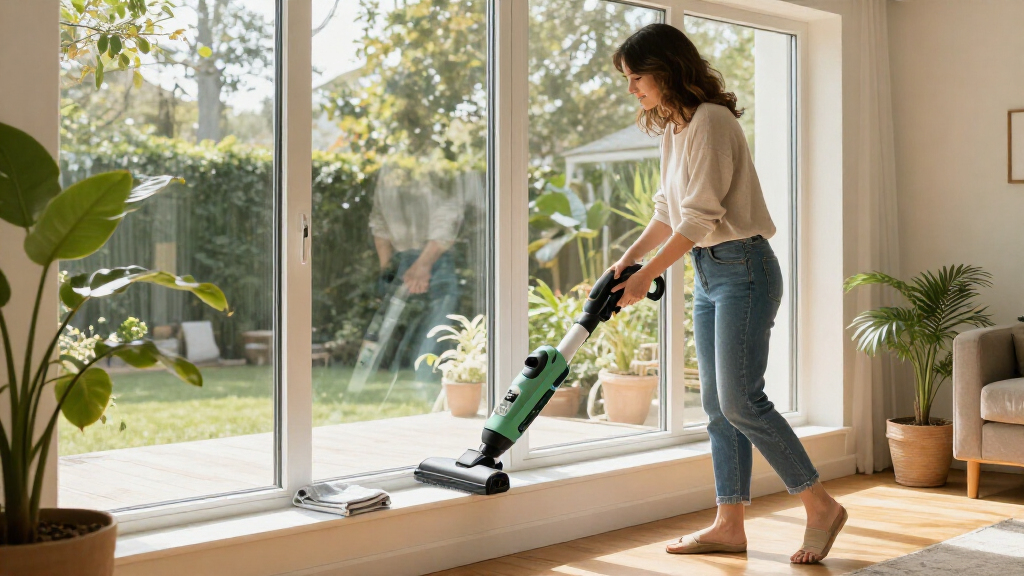
The vacuum is one part of a two-part cleaning setup, according to Pro Tool Reviews’ report. Users first apply cleaning solution with a combination spray bottle and microfiber pad, then pull the vacuum across the wet surface. An 11-inch squeegee directs liquid toward vents, where the machine draws it into a holding container. The collected liquid can be poured away, and the container rinsed.
Ryobi’s version takes power from its 18V One+ battery platform rather than relying on an integrated battery, the report says. It can use packs up to 6.0Ah, allowing users to swap batteries instead of waiting for a built-in battery to recharge. The battery sits behind a door rated IPX4, according to the source material. The tool is listed as a bare tool, meaning the stated $69.97 price does not include a battery or charger.
The PCL750B comes with a two-year warranty and is expected to be sold online and in select local Home Depot stores. Pro Tool Reviews said the product had not yet been tested by its reviewer. Its comments about likely cleaning performance draw on experience with a different window vacuum and on Ryobi’s product information, not hands-on testing of this model.
Where the Window Vacuum Fits
The announcement matters most to households and organizations that already use Ryobi 18V One+ tools and regularly clean accessible glass. A shared battery platform may reduce the need to buy a separate charging system, while the option to change packs can be useful for cleaning many windows in one session. At $69.97 before battery costs, the listed price also puts the tool within reach of buyers who want to try a dedicated window vacuum, though its value depends on whether they already own compatible batteries.
A window vacuum is not a replacement for every kind of glass cleaning. The source report identifies windows, mirrors, shower doors, tile and glass stovetops as potential uses, but says the method works best on smooth, flat surfaces that are easy to reach. The device collects liquid after a surface has been scrubbed; it does not remove heavy grime by itself. For readers, that means the expected time savings depend on the surface, the amount of buildup and whether the separate washing step is still needed.
Pro Tool Reviews also cautioned against assuming the tool will suit vehicle glass or all exterior windows. The reviewer said curved automotive glass and tight corners can make a window vacuum less effective, while outdoor windows may have heavier dirt and organic buildup. Those limits matter because the product’s name could otherwise suggest broader use than the report supports.
Popular right now

Shark HydroVac MessMaster Corded Wet Dry Vacuum and Mop (WD161)

LG 85-Inch QNED84B Mini LED 4K Smart TV (2026)

Samsung 75-Inch M80H Series Mini LED 4K Smart TV (2026)
As an affiliate, we earn on qualifying purchases.
How Ryobi’s Cleaning System Works
The product follows a familiar sequence used by window vacuums: wet and loosen dirt first, then remove the remaining liquid with a squeegee and suction. Pro Tool Reviews compared the setup with a Kärcher window vacuum the reviewer already uses. That comparison describes a similar type of tool, not a direct test of Ryobi’s model or proof that the two perform equally.
In the report, the reviewer said cleaning solutions used with window vacuums can stay wet longer than some conventional glass cleaners, leaving time for the squeegee to clear the surface. The reviewer’s experience with another brand was that this process can produce a streak-free finish. However, the report explicitly says Ryobi’s vacuum had not been tried, so its actual results, handling and reliability remain unverified.
The reviewer described the tool as better suited to regularly cleaned, accessible surfaces than neglected outdoor glass. For large buildings whose exterior doors and windows are cleaned often, the report suggested the vacuum could save time. He recommended a different approach for heavily soiled home exteriors, illustrating that cleaning frequency and soil level affect whether this tool is a practical choice.
“A window vacuum can genuinely save time and effort in your cleaning chores.”
— Pro Tool Reviews reviewer
Ryobi Model Still Awaits Testing
The central unknown is how the PCL750B performs in independent hands-on testing. The source report does not provide measured runtime, suction performance, cleaning speed, noise, weight or durability results. Its expectation that Ryobi’s model will work well is not a verified test finding.
Ryobi’s announcement information, as relayed by Pro Tool Reviews, gives a planned November 2026 release, price and warranty, but does not specify an exact on-sale date. The report also says the tool will be available online and in select stores; the locations and extent of in-store stock are not detailed. Battery and charger availability are not included in the bare-tool price, and the source does not give separate prices for those items.
It is also unclear how much the tool’s results will vary with glass condition, cleaning solution, user technique or the particular One+ battery used. The article’s use cases and cautions are the reviewer’s assessment of the category, not formal limits or performance guarantees published by Ryobi in the material provided.
November Retail Release Ahead
The next stated milestone is the PCL750B’s expected November 2026 launch at Home Depot. Ryobi says it will be available online and in select local stores as a bare tool for $69.97, with a two-year warranty. The announcement does not give a specific launch day, so buyers should check Home Depot listings as the release window approaches.
Independent testing after release will help establish whether the vacuum produces the finish and time savings suggested by experience with similar products. Until the Ryobi model has been tested, shoppers can use the confirmed specifications to judge whether its battery compatibility, 11-inch squeegee and price suit their cleaning needs, while treating performance expectations as provisional.
Key Questions
When will Ryobi’s 18V One+ Window Vacuum be available?
Ryobi’s PCL750B is scheduled to launch at Home Depot in November 2026. The source report does not provide an exact day.
How much does the PCL750B cost, and what is included?
The announced price is $69.97 as a bare tool. The report does not list a battery or charger as included; the product uses Ryobi 18V One+ battery packs.
How does the window vacuum clean glass?
The user first sprays cleaning solution and scrubs with the separate microfiber pad, then pulls the vacuum across the wet surface. Its 11-inch squeegee directs liquid into a holding container.
Has Ryobi’s model been tested for streak-free results?
Not in the cited Pro Tool Reviews report. The reviewer said they had not used the PCL750B; comments about streak-free cleaning were based on experience with another brand and should not be treated as confirmed Ryobi test results.
What surfaces may be less suitable for the vacuum?
The reviewer said window vacuums work best on smooth, flat, accessible surfaces, and cautioned against using this type of tool on vehicle glass or heavily soiled exterior windows. Those are the reviewer’s recommendations, not published Ryobi performance limits.
Source: protoolreviews.com